

When Coffee Costs More, Your Custom Coffee Bag Has to Earn Its Place
Arabica coffee prices crossed record levels in 2024 and have stayed elevated through 2026. The causes are layered: weather events in Brazil and Vietnam, tighter global supply, and logistics costs that have not fully recovered. For roasters, the math is uncomfortable. Green coffee that cost two dollars a pound three years ago can cost four dollars or more today. Retail prices have to move, and customers notice. In that environment, the bag sitting on the shelf is no longer just packaging. It is the first and most visible argument for why your coffee is worth paying more for. Custom coffee bags have always been a branding tool. Right now, they are also a pricing tool.The Margin Squeeze Roasters Are Feeling in 2026
Raising retail prices is harder than it sounds. A customer who has been buying a twelve-dollar bag for two years feels the shift when it becomes fifteen. Some of them hesitate. Others start comparing options. The roasters navigating price increases successfully are not doing it with apologies printed on the bag or explanations at the register. They are doing it by making the bag feel like the price is already justified before anyone reads a single word on it. That is a packaging problem as much as a communication problem. When a customer picks up a bag at a shop or receives one through a subscription, the first impression is entirely visual and tactile. The weight of the bag, the texture of the material, the way the zipper feels, the quality of the printing, whether the design looks like something a real brand made or something applied to a generic white label. All of that happens in a few seconds, and it happens before price even enters the conversation. Stock bags cannot do this work. They communicate economy by design. A roaster with a beautiful single-origin coffee from a carefully sourced farm deserves packaging that communicates the same care that went into the coffee inside it. When green coffee prices are up and retail prices have to follow, the bag is not the place to cut costs.Why Your Bag Is Your Best Price Justification
Think of the custom coffee bag as a physical argument for your product's value. Every design element either supports that argument or quietly undercuts it. A bag with thin printing, no valve, a flimsy zipper, and a stock silhouette says the roaster did not invest in this product. A bag with sharp custom printing, a quality degassing valve, a clean zipper seal, and thoughtful design says the opposite. Specialty coffee consumers in 2026 are more visually literate about packaging than they have ever been. They follow roasters on social media. They see strong and weak packaging constantly. They have internalized what quality looks like even if they could not describe the specific material or finish that creates the impression. A bag that matches the quality of the coffee inside it earns trust at the shelf before the customer opens it. Custom coffee bags are built to carry that message. When a roaster chooses materials, finishes, and design deliberately, the result is a bag that makes a clear case for why the coffee is priced the way it is. That case is made silently and in the first few seconds of contact, and it is more persuasive than anything that could be said at the counter.What Custom Bags Do That Stock Bags Cannot
Stock bags are a practical starting point for a brand still testing products or managing tight cash flow. But they have a ceiling, and that ceiling becomes a real problem when the roaster is trying to justify a price increase. A stock bag communicates nothing specific about the roaster. It does not tell the origin story. It does not reflect the roaster's aesthetic. It does not differentiate the product from the bag next to it on the shelf, because both bags may have come from the same supplier catalog. When everything on the shelf looks the same, customers default to price comparison. That is a race no roaster with elevated green coffee costs can afford to run. Custom bags break that dynamic. A well-designed bag gives a customer something specific to respond to. The color story, the typography, the origin callout on the front panel, the feel of a soft-touch matte finish, the visual weight of a foil accent. These are details that create a product that stands on its own terms, and customers do not price-compare products they believe in on their own terms. They simply buy them.- Custom printing lets the roaster control every detail of the brand presentation on shelf
- Material and finish choices directly shape whether the bag reads as premium or economy
- A one-way degassing valve signals freshness care in a way a plain stock bag cannot replicate
- A quality resealable zipper reinforces the idea that this is a product worth keeping and returning to
Materials and Finishes That Signal Premium
Material choice is where roasters often leave money on the table. The film structure of a coffee bag affects how it looks, how it feels, how it performs, and how a customer unconsciously reads it. A high-barrier foil bag or a MetPET bag with a matte or soft-touch finish communicates something entirely different from a clear bag or a plain unbranded exterior. Matte finishes in particular have become a visual shorthand for premium in the specialty market. The surface absorbs light rather than reflecting it, giving the bag a quiet, confident presence on the shelf that tends to read as higher-end to consumers even when they cannot explain why. Soft-touch varnish takes that further. When a customer picks up a bag with a soft-touch finish, the tactile experience matches the visual one. It feels different from a standard coffee bag, and that difference registers before the brain has time to process it rationally. Haptic finishes, embossing, and UV spot varnish are not decorative extras. They are sensory signals about product quality that shape how a customer values what is inside the bag. For roasters who want to pair premium design with a sustainability message, compostable packaging structures are now available at a quality level that does not compromise the premium shelf presence. Customers paying more for coffee in 2026 are increasingly asking whether that premium reflects values they share. A bag that performs well, looks sharp, and carries a clear sustainability story covers all three.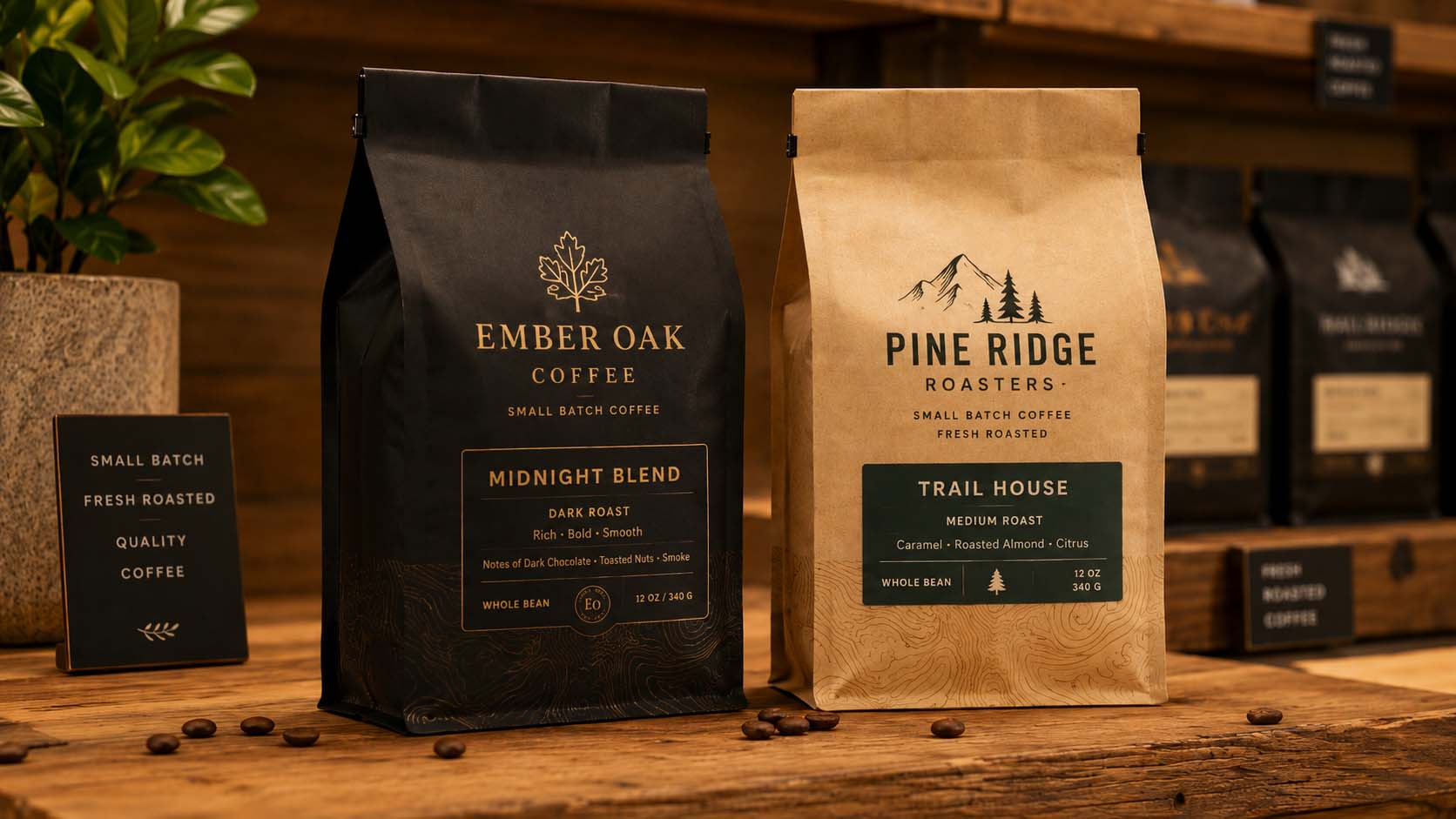
How Digital Printing Makes Custom More Accessible
One of the clearest arguments for investing in custom bags when costs are tight is that digital packaging has made them far more accessible than they were five years ago. A small or mid-size roaster does not need to commit to tens of thousands of units to get a professionally printed custom bag. Digital printing runs start at quantities that match the realistic order volume of a growing roastery, and turnaround times are shorter than traditional methods. That matters when a roaster is navigating a pricing adjustment. It may not make sense to lock into a large rotogravure order while the new retail price point is still being tested with customers. Digital printing allows a roaster to order a manageable quantity of custom-printed bags, place them in the market, and scale the order once the price is confirmed and selling well. The upfront investment is proportionate, and the result is a bag that can carry the premium positioning the roaster needs right now. For roasters ready to move into high-volume production with complex print requirements, rotogravure printing delivers the highest level of color consistency and print fidelity at scale. The two methods serve different stages of brand growth, and understanding both helps a roaster make the right call based on where the business is today rather than where it was two years ago.The Investment Case Worth Running
The math is simpler than it looks. The difference in cost per unit between a stock bag and a quality custom-printed coffee bag is real but smaller than most roasters expect, especially at moderate order quantities. On a per-bag basis, that cost difference is a fraction of the retail price increase a roaster is trying to justify. If a roaster is moving a twelve-dollar bag to fifteen dollars, the question is not whether the custom bag adds to the unit cost. It does, slightly. The real question is whether it adds three dollars or more in perceived value to the product. For most customers, a well-designed custom bag absolutely does. The customer paying fifteen dollars for a bag that looks, feels, and presents like a fifteen-dollar product is a satisfied customer. The customer paying fifteen dollars for something that still looks like it belongs in a discount bin is not. Packaging is often one of the last places a roaster looks when building a pricing strategy. It should be one of the first. The bag in a customer's hand at the moment of decision is doing more work than most roasters give it credit for. When thinking through what to prioritize on an upgrade, a few specific choices carry the most weight in how a bag reads as premium.- Front panel design: Is the brand identity strong and clear, and does the typography signal confidence?
- Surface finish: Does the material reinforce the brand tone, matte for understated quality, foil or gloss for bold and bright?
- Valve and zipper: Are both present and functional? These are the two details customers associate most closely with freshness and quality.
- Origin callout: Is the sourcing story visible on the front panel? Customers paying a premium in 2026 are buying a story as much as a coffee.
- Structural integrity: Does the bag stand upright cleanly on a shelf? A bag that slumps or wrinkles works against the premium message before anyone reads a word.
The Bag That Earns the First Customer
Custom packaging is an investment in the argument your product makes before anyone opens the bag. When green coffee costs more and retail prices have to reflect that, a stock bag stops being a neutral choice. It becomes a choice that actively works against the premium position you are trying to build. The roasters moving through price increases with their customer base intact are the ones whose packaging gives people a reason to believe before they taste. Custom coffee bags do that work when the design is intentional, the materials match the brand, and every sensory detail points in the same direction. The coffee earns the repeat customer. The bag earns the first one.Why Us?
 3x SCA Best New Product Award Winner
Industrial Compostable Packaging
Your Very Own White Label Mobile App
Pono Collective: Providing Coffee Education
Lower MOQs With Our Digital Print Process
Setting Trends While Elevating Your Brand
Contact Our Team!
Other Blogs of Interest


Kraft Coffee Bags: When Natural Paper Packaging Is the Right Call for Your Brand
Walk through a specialty coffee shop or a Saturday farmers market, and the kraft coffee bag tends to be the one that pulls your attention first. The brown paper exterior, matte and textured, gives a product a handcrafted quality that polished foil bags do not always match. Kraft coffee bags have earned...


Custom Coffee Bags Explained: Stand Up Pouches
Stand Up Pouches have been a favorite for roasters and customers for many years. Its design to stand upright on shelves offers the perfect balance of practicality and presentation for many businesses. Why Choose Stand-Up Pouches? This bag style is known for its "more bang for its buck" due to it...


Lock In Flavor: Resealable Coffee Bags With Air Tight Valve
From First Aroma To Final Cup Freshly roasted coffee gives off carbon dioxide and reacts fast with oxygen. A resealable coffee bag with an air tight valve solves both issues at once. The valve lets built up gas escape while blocking outside air, and the zipper cuts down oxygen each time you close t...


Ready to Brew Packaging Revolution: Single Use Tea and Coffee Bags
Brew Better Anywhere with Smart Single Serves Single serve brewing has changed how we drink both tea and coffee. Today you can pop a pouch into a cup, add hot water, and enjoy a fresh drink with almost no mess. Tea bags started the idea long ago. Coffee has caught up with drip bags and even coffee ...