

Walk through a specialty coffee shop or a Saturday farmers market, and the kraft coffee bag tends to be the one that pulls your attention first. The brown paper exterior, matte and textured, gives a product a handcrafted quality that polished foil bags do not always match. Kraft coffee bags have earned a loyal following in the specialty market for exactly that reason. But the look is only one part of the story. What goes inside the bag, how it is built, and whether it actually protects your coffee are questions every roaster should answer before placing an order. This guide breaks it all down.
What Makes Kraft Different From Standard Coffee Bags
Most coffee bags on the market today are built from laminated film structures. Foil bags use layers of metalized polyester film and polyethylene to create a high-barrier seal that blocks oxygen, moisture, and light from reaching the beans. Kraft coffee bags work from the same principle but replace the outer film layer with paper, giving the bag its natural appearance and texture. That single change creates a very different customer experience on the shelf or in a market basket. What many roasters do not realize at first is that the paper exterior of a kraft bag is largely aesthetic. The actual barrier work is done by the inner lining, typically a layer of metalized film, foil, or a biodegradable alternative like PLA (polylactic acid). The combination of a kraft paper shell with a functional inner liner is what separates a well-built kraft bag from one that looks the part but quietly fails to protect your coffee over time. Knowing this upfront changes the questions you ask when sourcing.- The outer kraft paper layer provides the look and texture, not the freshness protection
- The inner liner does the barrier work by blocking oxygen, moisture, and light
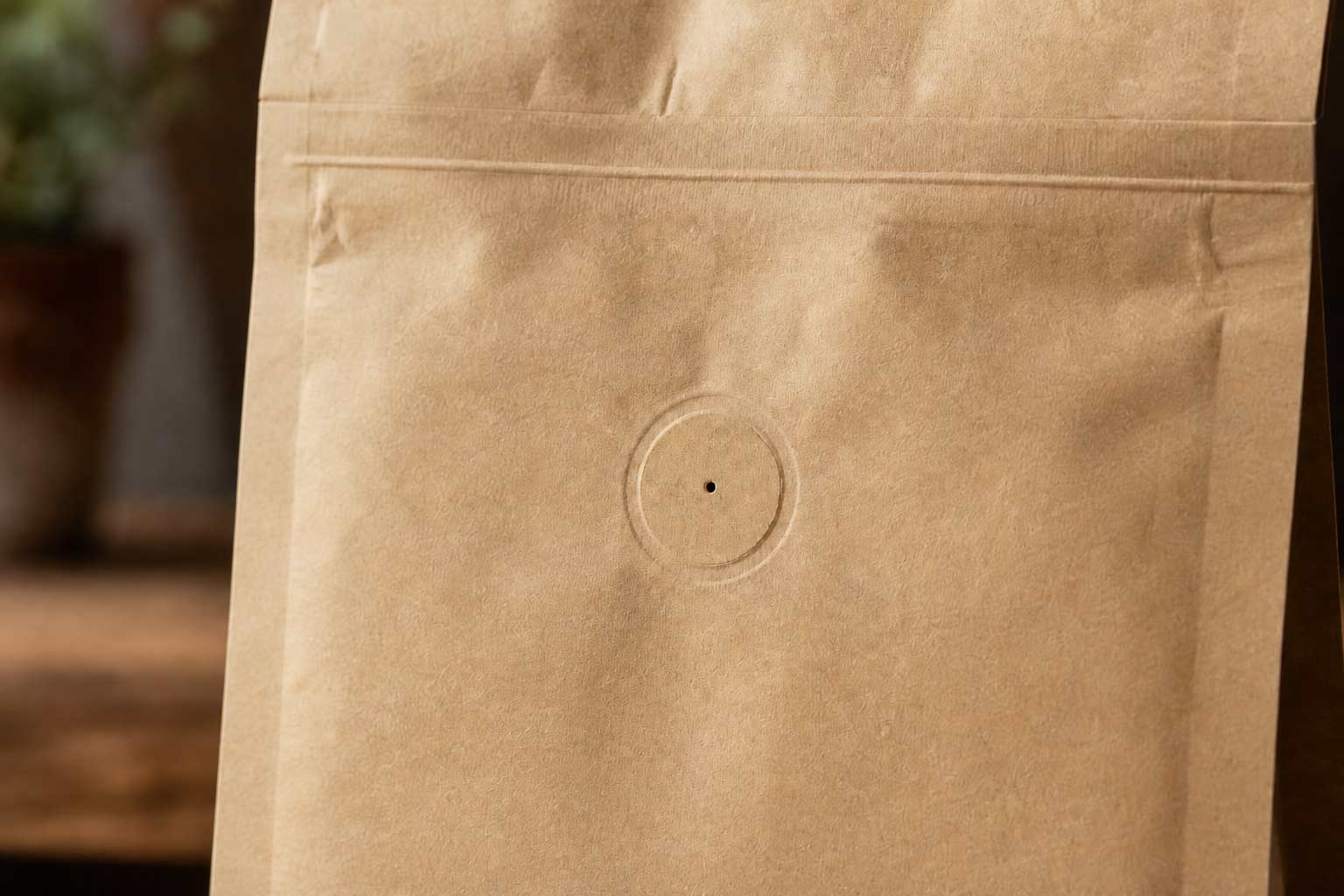
- A one-way degassing valve allows CO2 to escape after roasting without letting air in
- A resealable zipper improves the customer experience after the bag is first opened
The Natural Aesthetic That Sells at Markets and on Shelves
There is a reason kraft coffee bags have stayed popular long after other packaging trends have faded. The material communicates something that many coffee buyers respond to intuitively. It looks less processed. It feels closer to something made by hand, closer to the farm or the roastery than to a production line. That association with craft, quality, and simplicity is a genuinely useful branding tool, and it works before a single word on the bag is read. For brands that sell at farmers markets, pop-up events, or boutique retail shops, kraft packaging fits the environment naturally. A bright, glossy pouch can feel out of place next to handwritten price cards and wooden display crates. A kraft bag belongs there. It reinforces the story a small roaster is already telling about what makes their product worth choosing. This aesthetic advantage extends to e-commerce and subscription sales as well. Unboxing content featuring kraft packaging tends to perform well on social media because the material photographs in a way that feels warm and genuine rather than commercial. That kind of organic visual appeal is something other materials have a harder time replicating, and it tends to show up consistently across different types of brands and markets.Barrier Protection: What Is Actually Keeping Your Coffee Fresh
This is where roasters need to pay close attention. Not all kraft coffee bags are built the same, and the difference between a bag that protects your coffee and one that does not comes down entirely to the liner. Plain kraft paper on its own has very limited barrier properties. Without an inner lining, oxygen and moisture will reach the coffee within days, stripping out flavor and aroma well before the bag arrives at a customer's home. This is why the liner is not optional. It is the core functional component of any kraft coffee bag worth selling, and it should be the first question you ask any supplier. The most common liner types you will find when sourcing kraft bags:- Foil or VMPET liners offer excellent barrier protection and a long shelf life, though they affect end-of-life recyclability
- PLA-lined kraft bags use a plant-based inner layer and are often certified for industrial composting
- Glassine liners are a lighter option used mainly for short shelf-life products, sample sizes, or gift sets
Kraft Bag Styles and Closure Options
Kraft paper works well across several bag formats, giving roasters options based on the weight they are filling, the shelf space they have, and how customers will interact with the bag at home. The most common kraft coffee bag formats are the flat bottom box bag, the stand-up pouch, the side gusset bag, and the classic flat bag with a tin tie closure. Each one has a different role depending on the context. Flat bottom box bags stand upright with a stable, square base and display well on retail shelves. Stand-up pouches are similar but slightly less structured, offering a lower-cost entry point while still presenting cleanly on a countertop or market table. Side gusset bags are the traditional choice for larger fills and wholesale accounts. The tin tie flat bag is one of the oldest kraft formats in coffee, a simple paper bag with a folded metal strip at the top that customers roll and press closed. It remains popular for smaller fills, market settings, and roasters who want the most approachable and straightforward presentation possible. Closure and feature options to consider when building your kraft bag spec:- Tin ties for a classic, low-cost closure that most customers already know how to use
- Resealable zippers for convenience and a more premium feel at the kitchen counter
- One-way degassing valves to release CO2 from freshly roasted coffee without letting air inside
- Clear windows to let the beans show through and add a natural visual element to the finished design
Custom Printing on Kraft: What Roasters Should Know
Printing on kraft paper produces results that look and feel distinct from printing on foil or standard film bags. The surface of natural kraft is matte and textured, which means ink absorbs differently than it does on a smooth, glossy substrate. Colors tend to appear warmer and slightly softer. Earth tones, deep greens, creams, and blacks print beautifully on kraft and can look stunning with the right design. High-saturation colors or very bright whites are more challenging to achieve on unbleached kraft without a white base coat printed underneath. Digital printing on kraft bags is well-suited for small batches and custom work. The short-run capability means a roaster can print a modest quantity for a seasonal release, a limited single origin, or a market-specific product without committing to a large production run. This makes kraft a practical choice not only for permanent product lines but also for test batches and special releases where high-volume commitment is not yet the right move. White kraft paper, which is bleached rather than unbleached, offers a brighter printing surface while still maintaining the paper texture that sets kraft apart. If your brand identity depends on high-contrast color or a clean white background, white kraft may give you more visual flexibility while still delivering the natural paper look and feel your customers appreciate.When Kraft Is the Right Call for Your Brand
Kraft coffee bags are a strong choice for roasters and food brands that want their packaging to reflect authenticity, craft, and a connection to natural materials. They work especially well in the specialty and artisan market, where the story behind the product matters as much as the product itself. If your brand sells on the idea of quality sourcing, small-batch roasting, or environmental responsibility, kraft packaging reinforces all of that the moment someone picks up the bag. That said, kraft is not the right fit for every situation. If your shelf life requirements are long, if you operate in a high-humidity environment, or if your brand design is built on bold modern graphics and vivid colors, a foil or film-based bag may serve you better. The right packaging decision always starts with what your product needs first, and kraft performs best when the liner is properly matched to your coffee and the design is built to work with the material rather than push against it. If sustainability is a priority for your brand, kraft opens a genuine opportunity. Choosing a kraft bag with a certified compostable liner, pairing it with a degassing valve, and communicating end-of-life options clearly on the bag gives your customers something real and actionable. That combination of natural aesthetics and verified sustainability credentials is a strong position in today's market, especially for roasters selling in communities where environmental values play a real role in what people choose to buy and come back to buy again.The Best Packaging Works as Hard as It Looks
Kraft coffee bags have held their place in specialty coffee for good reason. The material carries a visual honesty that synthetic films cannot quite replicate, and for brands built on quality, origin, and craft, that connection matters to customers from the first moment of contact. But the best kraft bag is one where the look and the engineering work together. The paper draws people in. The liner protects the coffee. The right closure makes the everyday experience better for the person opening the bag at home. When all of those pieces come together in a bag that fits your brand, your shelf, and your customer, you end up with packaging that does more than hold coffee. It earns trust before a single word is read.Why Us?
 3x SCA Best New Product Award Winner
Industrial Compostable Packaging
Your Very Own White Label Mobile App
Pono Collective: Providing Coffee Education
Lower MOQs With Our Digital Print Process
Setting Trends While Elevating Your Brand
Contact Our Team!
Other Blogs of Interest


What's the Best Material for Your Custom Coffee Bag Packaging?
Let's start with what is the best material for coffee packaging? In short, for optimal freshness and a long shelf life, the best base material for your coffee packaging is aluminum. Aluminum preserves freshness the longest because it protects your coffee from: Air Light Moisture These 3 fac...


What are the Differences between Industrial Compostable and Home Compostable Coffee Packaging?
Did you know that in packaging, the phrase "compostable" can mean one of two things? Industrial Compostable or Home Compostable. About Industrial Compostable Packaging: Industrial Compostable Packaging requires optimal heat conditions in order to break down and needs to be processed in an industrial ...


Does Your Coffee Packaging Actually Work? Shelf Life Explained
How Packaging Impacts Coffee Shelf Life Not all packaging keeps coffee fresh the same way. Let’s break down how material type, resealability, and valve options impact how long coffee can stay at its best. Shelf Life with Non-Aluminum Barriers Packaging without aluminum doesn't seal in fre...


METPET vs PET Coffee Bags: What’s the Real Difference?
Freshness Wins with the Right Coffee Barrier People often mix up METPET and PET in coffee packaging. They are related but not the same. PET is a clear, tough plastic. METPET is PET that has a very thin metal layer, usually aluminum. That thin layer changes how well the package blocks oxygen, moistu...