

The Specialty Coffee Market Grew Beyond the Roasted Bean
Most conversations about [custom coffee bags](/custom-coffee-bags/) start and end with roasted whole bean and ground coffee. That makes sense because roasted coffee is still the biggest slice of the market. But the specialty coffee category has expanded well past the bag of beans, and a lot of brands are now selling products that need packaging built specifically for what is inside. Cold brew concentrate sold by the bottle was the early wave. Now brands are moving that product into flexible pouches because the cost is lower, the packaging is lighter, and the shelf presence is easier to manage. Single-serve drip filter pouches have exploded in popularity, especially with brands selling online and in specialty retail. Ready-to-drink coffee products in flexible formats are carving out shelf space next to canned beverages. Each of these products has different packaging needs, and grabbing a standard roasted coffee bag off the shelf and expecting it to work is where a lot of small brands run into trouble. This guide breaks down what makes these product categories different, what kind of packaging actually works for each, and how to approach ordering [custom coffee bags](/custom-coffee-bags/) for specialty drink products in 2026.Cold Brew Concentrate: Packaging a Liquid Product
Cold brew concentrate is a fundamentally different fill than roasted coffee. You are dealing with a liquid or semi-liquid product, which means the packaging has to seal against moisture from the inside and outside at the same time. Standard dry-fill coffee bags are not built for this. The seals, the film construction, and often the closure system all need to be spec'd for liquid. The most practical flexible packaging option for cold brew concentrate is the spouted stand-up pouch. This is a stand-up bag with a plastic spout and cap fused into the top or side of the bag. The spout allows the consumer to pour the product without cutting the bag open, and it reseals after use. That resealability matters a lot for concentrate because the product is mixed at a ratio, meaning the customer uses a portion and stores the rest. The barrier film for cold brew concentrate needs to block oxygen from getting in and keep the liquid from interacting with the film layers. A foil laminate is a strong choice here because it creates an excellent barrier on both counts. Some brands opt for a high-barrier clear film that includes an EVOH layer, which allows for a transparent bag that shows the product color. Both are solid options. The key is that the film specification needs to come from someone who understands liquid fill applications, not just dry coffee packaging. Fill volume matters more than most brands anticipate when sizing cold brew pouches. A 32-ounce spouted pouch looks large on paper but leaves almost no headspace when filled, which affects how the bag stands up on a shelf. Work with your packaging supplier to test the actual fill weight and volume before committing to a bag size. What looks right in a mockup can look sloppy on a shelf when the pouch is overfilled or underfilled.Single-Serve Drip and Filter Pouches
The single-serve drip pouch is one of the fastest-growing formats in specialty coffee right now, and it is also one of the most misunderstood from a packaging standpoint. These are not just small coffee bags. They are a complete brewing system built into a package. The drip pouch is a sealed filter filled with pre-measured ground coffee. The consumer opens it, hooks the filter wings over the edges of a mug, and pours hot water through the coffee directly into the cup. The packaging has to hold the coffee without letting grounds escape through the filter material, survive transport without the filter tearing, and deliver a consistent brew every time.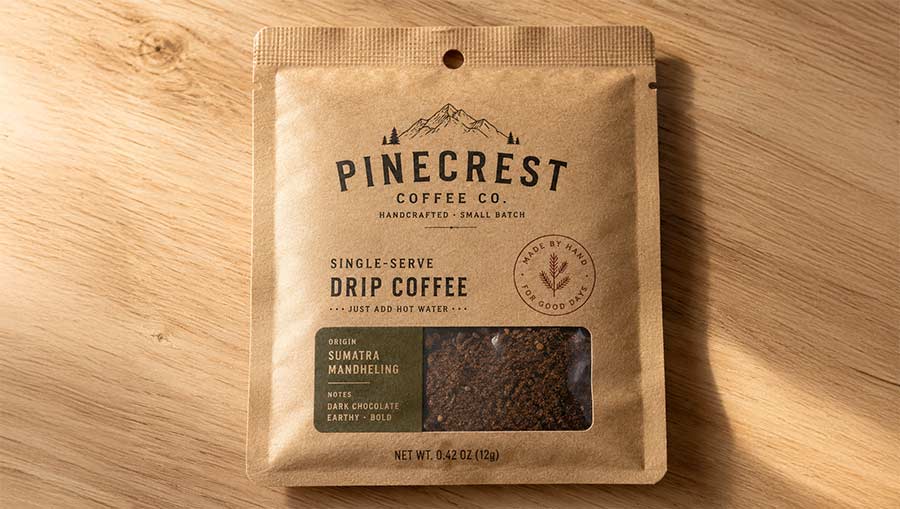 The outer packaging for these single-serve pouches is typically a foil-lined pouch that is sealed and nitrogen-flushed to preserve freshness. Each individual drip bag is usually packed inside a larger sealed outer bag, and that outer bag is where the brand has the most print area to work with. This is where [custom coffee bags](/custom-coffee-bags/) come into play for this category. The outer packaging is a real branding opportunity, and brands that invest in quality print and a premium material finish on the outer pouch see the difference at the point of sale.
For brands selling single-serve drip pouches in retail, the outer package usually holds somewhere between five and ten individual servings. For online and subscription sales, larger counts make sense. Either way, the outer bag needs to be resealable so the customer can access servings over time without the remaining pouches going stale.
The outer packaging for these single-serve pouches is typically a foil-lined pouch that is sealed and nitrogen-flushed to preserve freshness. Each individual drip bag is usually packed inside a larger sealed outer bag, and that outer bag is where the brand has the most print area to work with. This is where [custom coffee bags](/custom-coffee-bags/) come into play for this category. The outer packaging is a real branding opportunity, and brands that invest in quality print and a premium material finish on the outer pouch see the difference at the point of sale.
For brands selling single-serve drip pouches in retail, the outer package usually holds somewhere between five and ten individual servings. For online and subscription sales, larger counts make sense. Either way, the outer bag needs to be resealable so the customer can access servings over time without the remaining pouches going stale.
RTD Coffee in Flexible Packaging
Ready-to-drink coffee has been dominated by cans and bottles, but flexible packaging is making inroads in 2026 for brands that want a lower cost-per-unit and a lighter product to ship. Flexible RTD coffee packaging typically uses a standup spouted pouch similar to cold brew concentrate, but the fill requirements are stricter because the product is ready to consume and often contains dairy or dairy alternatives that increase the challenge. Shelf-stable RTD coffee in flexible packaging requires an aseptic or hot-fill process and a barrier film that can handle the thermal stress of filling at high temperatures. This is a more specialized area of [food packaging](/food-packaging/) that requires coordination between your filling partner and your packaging supplier. It is not impossible for small brands, but it requires a conversation early in the development process, not at the point of ordering bags. Cold-chain RTD coffee in flexible pouches is more accessible for smaller brands because the cold environment handles some of the preservation work. The barrier specification is still important, but the fill process is simpler. If your product is sold refrigerated and has a relatively short shelf life, the packaging requirements are more manageable than shelf-stable formats.How the Barrier Film Spec Changes for These Products
Standard roasted coffee bags are designed to manage one primary enemy: oxygen getting in and degrading the coffee. The degassing valve on a roasted coffee bag is actually there to let CO2 out, not to let anything in. The bag is a one-way system for a dry product with relatively low moisture activity. Specialty drink packaging flips some of those assumptions. Cold brew concentrate is highly susceptible to oxidation, but it is also a liquid that creates pressure inside the bag and puts different stress on seals and film layers. Single-serve filter pouches need to preserve aroma and freshness like roasted coffee but in a much smaller package with more surface area relative to product volume. RTD products may involve heat, acidity, or dairy that interacts with certain film materials in ways that dry coffee never would. The practical takeaway is that you should not assume that a film spec that works for your roasted coffee line will transfer to a cold brew or RTD product. Ask your packaging supplier for a film recommendation based on the specific product, the fill process, the intended shelf life, and whether the product will be refrigerated or shelf-stable. A good supplier will treat those as separate conversations, not a one-size answer.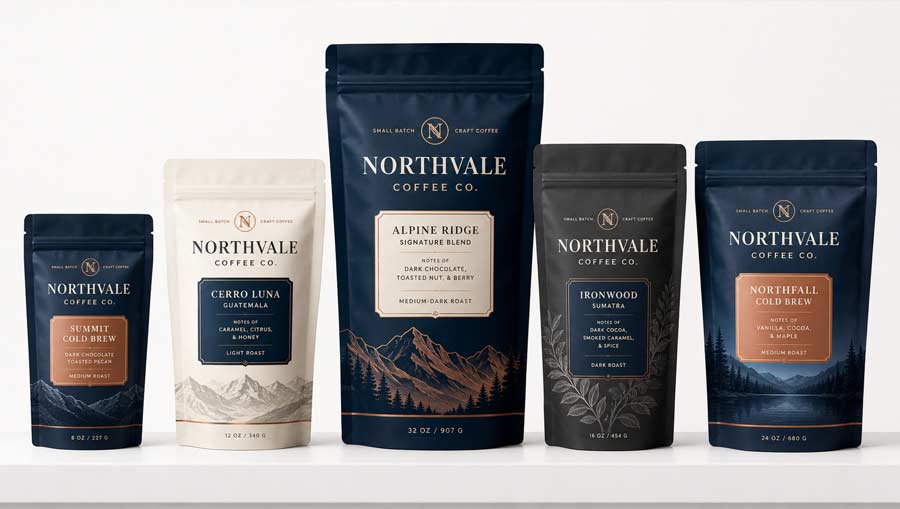
Print Options: Digital and Rotogravure for Specialty Products
The print process for specialty drink pouches follows the same logic as it does for roasted coffee bags. [Digital packaging](/digital-packaging/) is the right starting point for most small brands because it keeps the minimum order quantity low, eliminates plate costs, and makes it easy to run multiple SKUs or test different bag sizes without a large financial commitment. For cold brew brands with multiple flavor offerings or seasonal releases, digital printing is especially practical. You can run each SKU independently without the cost of separate printing plates for each one. The design quality is high, and the turnaround time is shorter than gravure. [Rotogravure](/rotogravure-bags/) becomes the better economic choice when your order volume climbs into the tens of thousands of units. At that scale, the plate cost is offset by the lower per-unit price, and color consistency across a large run is excellent. Brands that have moved their cold brew or RTD product into wide retail distribution often make the switch to rotogravure as volume grows. If you are producing a specialty drink product and are not sure which print method fits your situation, start with an honest look at your projected sell-through. If you can realistically move a few thousand units in six months, digital makes sense. If you are placing product in hundreds of retail doors and filling large orders, rotogravure is worth the conversation.Sustainable Options for Cold Brew and Specialty Pouches
Sustainability in specialty drink packaging is more complex than it is for roasted coffee bags because the barrier requirements are often stricter. High barrier films that use foil or EVOH layers are harder to recycle through standard streams than single-material films, and the trade-off between barrier performance and end-of-life recyclability is real. That said, there are meaningful options. [Compostable packaging](/compost-plus-sustainable-packaging/) certified for industrial composting is available for some flexible pouch formats, including cold brew and dry-fill pouches. The barrier performance is not always equivalent to conventional foil laminates, so it requires careful testing against your specific product. But for brands with a strong sustainability commitment and the right distribution context, it is a viable path. For single-serve drip pouches specifically, the compostable format has been gaining ground because the individual filter and pouch can often be composted along with the spent coffee grounds. That is a compelling end-of-life story for environmentally focused specialty coffee brands, and it is worth exploring with your packaging partner.What to Get Clear on Before You Order
Ordering custom coffee bags for cold brew, RTD, or single-serve products works best when you go into the conversation with a few things already figured out. Know your fill process. Are you filling cold, hot, or at ambient temperature? Are you using a co-packer or filling in-house? The fill process affects the bag spec, not just the label design. Know your fill weight and headspace. For liquid products especially, the actual fill volume versus the bag capacity determines how the finished product looks and stands. Get a sample filled before you finalize the bag size. Know your shelf life target and storage conditions. A cold brew concentrate sold refrigerated with a 30-day shelf life has very different packaging needs than a shelf-stable product aiming for 12 months. Know your retail environment. Products sold in refrigerated cases face condensation and humidity that affect label adhesion and bag appearance. Products sold at room temperature need different barrier considerations. Bring all of this to your first conversation with a packaging supplier. The more information you can share upfront, the more useful the recommendation will be.The Right Bag for the Right Product
The specialty coffee market is moving fast in 2026, and the brands keeping up are the ones treating packaging as a product decision, not just a label decision. Cold brew concentrate, single-serve drip pouches, and RTD formats all have room for great branding and functional packaging that performs from fill to final purchase. Getting there starts with understanding what each product actually needs and then finding the right film, closure, and print solution to match. If you are developing a cold brew, filter pouch, or specialty drink product and want help figuring out the right [custom coffee bags](/custom-coffee-bags/) for it, Savor Brands works with specialty food and beverage brands at every stage of growth. We offer [digital packaging](/digital-packaging/) for smaller runs and scale with you as volume grows.Why Us?
 3x SCA Best New Product Award Winner
Industrial Compostable Packaging
Your Very Own White Label Mobile App
Pono Collective: Providing Coffee Education
Lower MOQs With Our Digital Print Process
Setting Trends While Elevating Your Brand
Contact Our Team!
Other Blogs of Interest


Kraft Coffee Bags: When Natural Paper Packaging Is the Right Call for Your Brand
Walk through a specialty coffee shop or a Saturday farmers market, and the kraft coffee bag tends to be the one that pulls your attention first. The brown paper exterior, matte and textured, gives a product a handcrafted quality that polished foil bags do not always match. Kraft coffee bags have earned...


Ready to Brew Packaging Revolution: Single Use Tea and Coffee Bags
Brew Better Anywhere with Smart Single Serves Single serve brewing has changed how we drink both tea and coffee. Today you can pop a pouch into a cup, add hot water, and enjoy a fresh drink with almost no mess. Tea bags started the idea long ago. Coffee has caught up with drip bags and even coffee ...


Lock In Flavor: Resealable Coffee Bags With Air Tight Valve
From First Aroma To Final Cup Freshly roasted coffee gives off carbon dioxide and reacts fast with oxygen. A resealable coffee bag with an air tight valve solves both issues at once. The valve lets built up gas escape while blocking outside air, and the zipper cuts down oxygen each time you close t...


Custom Coffee Bags Explained: Stand Up Pouches
Stand Up Pouches have been a favorite for roasters and customers for many years. Its design to stand upright on shelves offers the perfect balance of practicality and presentation for many businesses. Why Choose Stand-Up Pouches? This bag style is known for its "more bang for its buck" due to it...