

The Bright Green Color Is the Whole Point, and It Fades First
The short answer is simple. The best matcha tea packaging is an opaque, high barrier pouch, a tin, or a pouch tucked inside a tin, because the package has to lock out light, oxygen, and moisture, the three things that turn bright green matcha into a dull, stale powder. That is the whole job, and the rest of this guide shows how to get there without overspending or watering down your brand look. Matcha sells with its color before anyone ever tastes it. That vivid jade green is the signal a shopper reads in a half second on the shelf, telling them the powder is fresh, high grade, and worth a premium price. The problem is that the green is also the very first thing to go. Matcha is a fine powder ground from shade grown tea leaves, and that fine grind gives it an enormous amount of surface area exposed to air. The moment it is milled, the clock starts. So matcha tea packaging has one job above all others, and that is to protect the color and the soft, grassy, slightly sweet flavor that comes with it. This is what makes matcha harder to package than coffee. Coffee beans are larger, they off gas carbon dioxide that helps push oxygen out, and a little color shift does not scare anyone away. Matcha does the opposite. It has no protective gas of its own, it browns quickly when air and light reach it, and a customer who sees a dull olive powder will assume it is old and walk away. Get the packaging right and your matcha looks alive on the shelf and tastes the way it should weeks later. Get it wrong and even a beautiful, expensive matcha can look tired before it sells.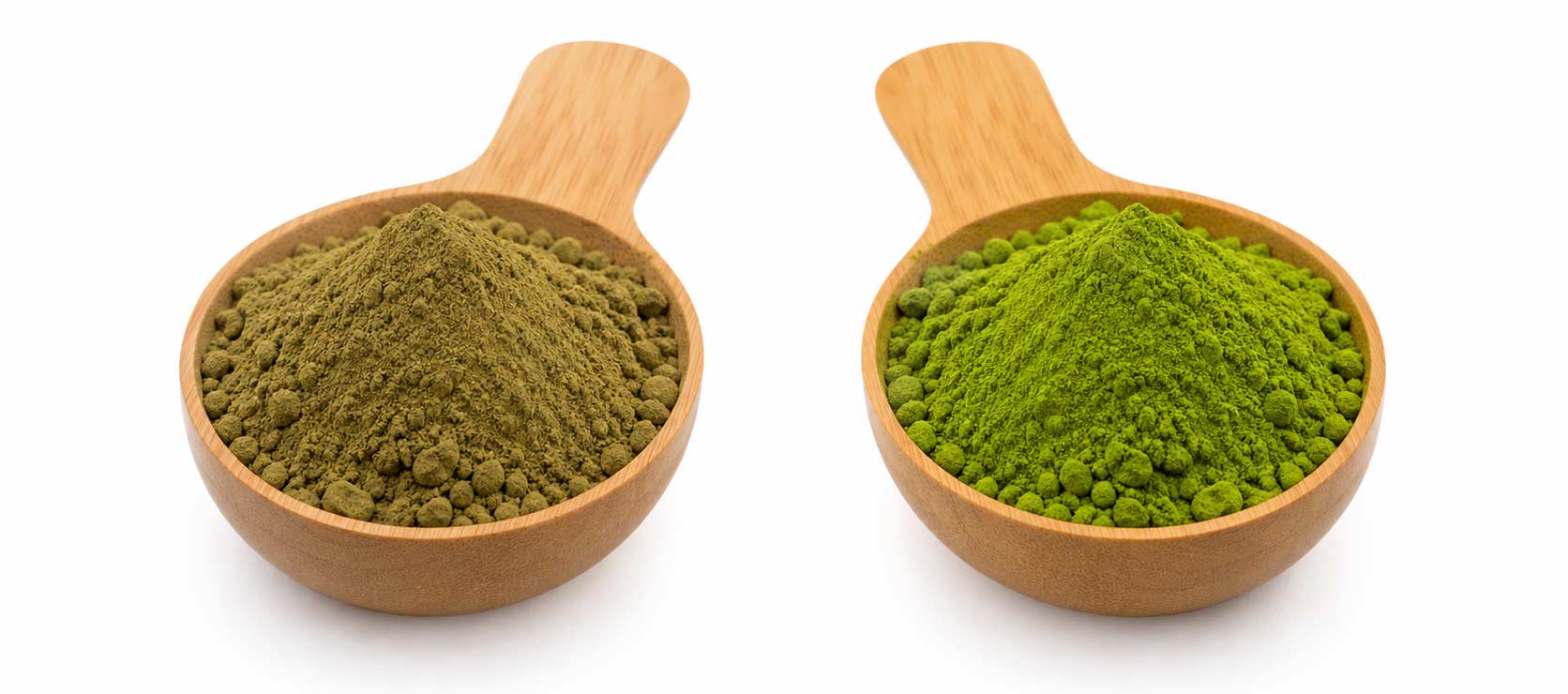
What Actually Wrecks Matcha Inside the Bag
Four things attack matcha, and they work together. Light is the loudest enemy, because the chlorophyll that gives matcha its green color breaks down fast under sunlight and even under bright store lights. Oxygen is next, slowly oxidizing the powder so the color turns brown and the fresh flavor flattens into something dull and hay like. Moisture causes clumping and speeds up every other kind of breakdown, and heat simply makes all of it happen faster. None of these act alone, which is why a clear jar on a sunny shelf is just about the worst home a matcha can have. Every smart matcha powder packaging choice, from the material to the bag style to the finish, traces back to blocking one or more of these four.- Light fades the green by breaking down chlorophyll, so the package needs to block it out
- Oxygen browns the powder and dulls the flavor, so a strong air barrier matters most
- Moisture causes clumping and faster spoilage, so the seal and the film both have to hold tight
- Heat speeds up every other reaction, so storage and shipping should stay cool
The Materials That Keep Matcha Fresh
The single biggest decision in matcha tea packaging is the material, because that is what stands between the powder and the air. The strongest protection comes from a high barrier film built with a foil or aluminum layer. That metal layer blocks light completely and lets almost no oxygen or moisture pass through, which is exactly what a sensitive green powder needs. Many premium teas and coffees use the same kind of laminate for this reason, and it is the safest default for matcha that has to sit on a shelf for months. Films built with an EVOH barrier layer can be made clear or frosted for a different look, and they work for matcha that sells quickly. A clear window is always a tradeoff, though, since any light that reaches the powder starts fading it. If you love the idea of a window, keep it small and pair it with a strong barrier everywhere else. The right structure depends on how fast your matcha sells and how long you need it to stay vivid, and that is the kind of call a food packaging partner can help you make based on your shelf life goal.- A foil or aluminum barrier layer blocks light and oxygen the best, the safest choice for matcha
- EVOH based films can be clear or frosted, but any clear area lets light fade the color
- A resealable zipper keeps air out after the first open, which matters for daily use
- The faster your matcha sells, the more freedom you have to choose looks over maximum barrier
Tins, Pouches, or Both
Once the material is settled, the next question is the format, and matcha really has three common answers. Tins are rigid, fully opaque, and feel premium in the hand, and many customers reuse them, which keeps your brand on the counter. Stand up pouches are lightweight, take up less space, ship cheaper, reseal with a zipper, and give you a large, smooth surface to print a beautiful design. The third answer is the one a lot of serious matcha brands land on, which is a pouch tucked inside a tin, so the pouch does the sealing work while the tin adds light protection and a premium feel.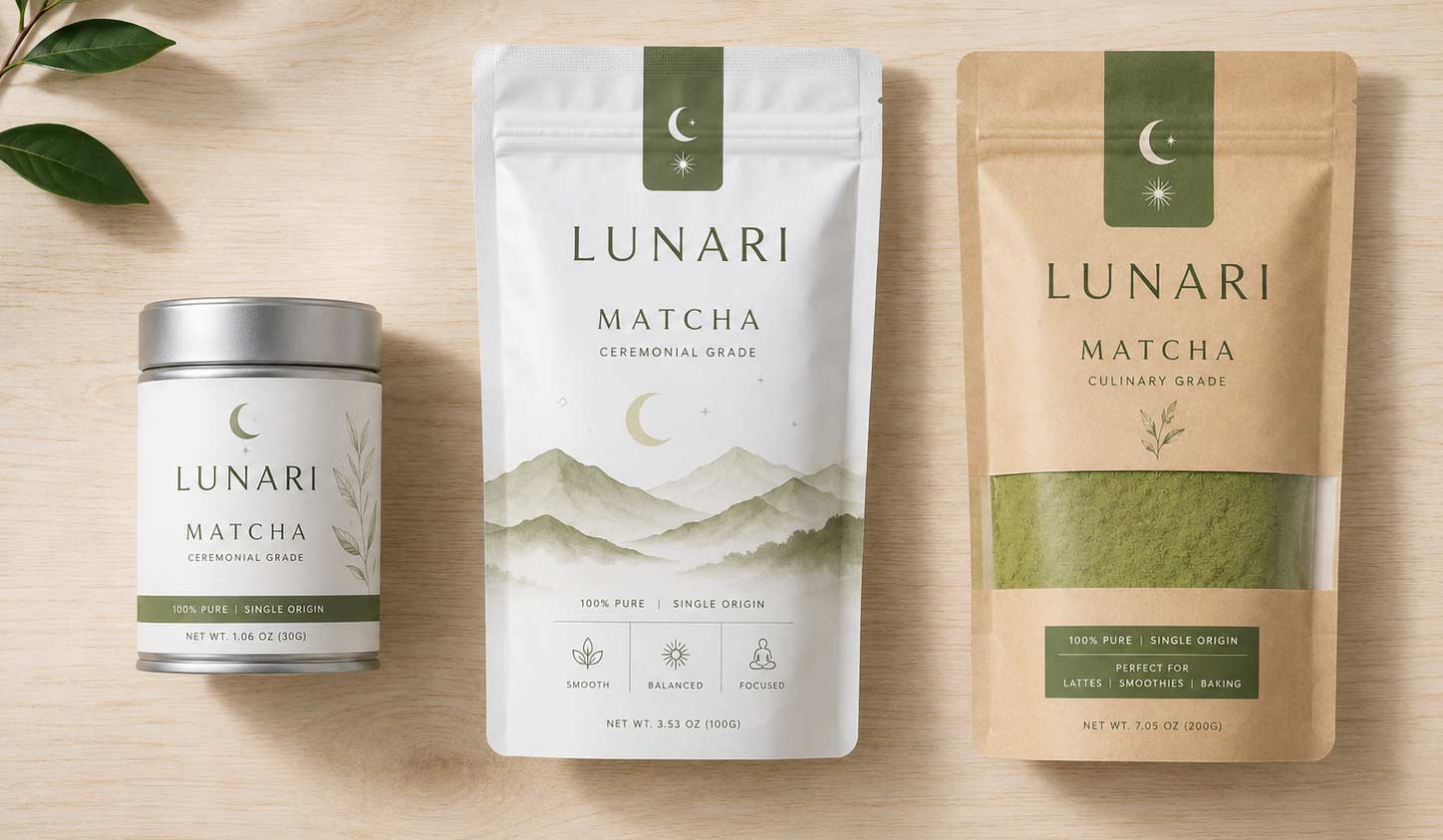 Size matters here too, because matcha is usually sold in small amounts. Retail tins and pouches often run around 30 grams to 100 grams, since matcha is used a little at a time and stays freshest in a package that gets used up quickly. Cafes and back bar customers want larger refills, often 250 grams up to a pound or two, and those almost always belong in a strong resealable pouch. The good news is that the same pouch technology behind custom coffee bags works beautifully for matcha, so you are not reinventing anything, you are applying proven barrier bags to a more sensitive product.
- Tins are opaque and premium, and customers often reuse them
- Stand up pouches are lighter, cheaper to ship, resealable, and great to print on
- A pouch inside a tin gives the strongest protection plus a high end feel
- Small retail sizes stay freshest, while cafes want larger resealable refill pouches
Custom Matcha Packaging That Looks as Good as It Protects
Protection gets your matcha to the shelf in good shape, but custom matcha packaging is what makes someone pick it up. The green of the powder gives you a natural color story to build on, and a clean, confident design signals quality just as loudly as the price tag. This is where printing choices come in. Custom digital printing unlocks at 2,000 units, which is a friendly starting point for a newer matcha brand or for a lineup with several flavors and sizes. For high volume brands ordering 10,000 units or more, rotogravure printing brings the lowest cost per unit and the richest, most consistent color, including true Pantone matching for that exact brand green you do not want drifting from one run to the next. Finishes add the last layer of polish. A soft touch matte coating gives the bag a calm, premium feel that suits the wellness vibe of matcha, while a touch of foil stamping or spot gloss can make a logo pop without going loud. One thing to know up front is that ready to ship stock bags come in fixed, preset sizes and can only carry UV 3D raised print, not full color artwork, so if you want full color custom matcha powder bags with your own design, that calls for digital or rotogravure printing rather than stock. A digital packaging run is usually the easiest way for a growing matcha brand to get a fully printed, shelf ready bag without a huge first order.- Digital printing starts at 2,000 units, ideal for new brands and multiple SKUs
- Rotogravure starts at 10,000 units, with the lowest cost per unit and true Pantone color
- Soft touch matte, foil stamping, and spot gloss add a premium feel that fits matcha
- Stock bags use fixed sizes and UV 3D raised print only, so full color custom needs digital or rotogravure
Eco Friendly Matcha Packaging Without Giving Up Freshness
Matcha buyers tend to care about health and the planet, so eco friendly matcha packaging is not just a nice extra, it is part of the brand promise. The honest challenge is that the strongest barrier materials are not always the easiest to recycle, so the goal is to protect the powder while making the most responsible choice you can. There are real options on the table today, from industrial compostable films to recyclable single material structures and films that include recycled content. Each one balances barrier strength against end of life in a slightly different way, and the right pick depends on how much shelf life your matcha needs. A good middle path for sensitive powders is an industrial compostable structure that still delivers real barrier protection, which is the idea behind Compost+ sustainable packaging. You keep the freshness matcha demands while giving customers a greener end of life story to feel good about. Pair that with low waste printing and you cover both halves of the promise, since eco friendly digital printing reduces setup waste and works well for the smaller, more frequent runs that matcha brands tend to order. You do not have to choose between keeping matcha green and keeping your packaging responsible. Match the material to your shelf life and your values, and you can have both.- Industrial compostable films can still offer strong barrier protection for powders
- Recyclable single material structures and recycled content films are growing options
- The right eco choice depends on how long your matcha needs to stay fresh
- Low waste digital printing pairs well with the small, frequent runs matcha brands order
When the Color Holds, the Brand Holds
Green Sells the Matcha, So Let the Bag Protect the Green Matcha is a product that lives or dies by its color, and that makes matcha tea packaging one of the most important decisions a tea brand will make. Block the light, seal out the oxygen and moisture, keep it cool, and the vivid green that drew the customer in survives all the way to the last scoop. From there it becomes a branding opportunity, where a strong barrier bag, a clean custom print, and a thoughtful eco friendly choice all work together to make your matcha look as good as it tastes. Choose the material for the shelf life you need, choose the format for how your customers use it, and you end up with packaging that protects the powder and sells the brand at the same time.Why Us?
 3x SCA Best New Product Award Winner
Industrial Compostable Packaging
Your Very Own White Label Mobile App
Pono Collective: Providing Coffee Education
Lower MOQs With Our Digital Print Process
Setting Trends While Elevating Your Brand
Contact Our Team!
Other Blogs of Interest


How to Choose Oxygen Safe Packaging for Coffee and Tea
Keep Oxygen Out, Keep Flavor In Oxygen is the quickest way to dull flavor. It flattens crema on espresso and steals the top notes from green and black teas. Smart packaging slows that damage. Coffee packaging often uses degassing valves and foil laminates to vent CO₂ while blocking oxygen. Tea pack...


Ready to Brew Packaging Revolution: Single Use Tea and Coffee Bags
Brew Better Anywhere with Smart Single Serves Single serve brewing has changed how we drink both tea and coffee. Today you can pop a pouch into a cup, add hot water, and enjoy a fresh drink with almost no mess. Tea bags started the idea long ago. Coffee has caught up with drip bags and even coffee ...


What are the Differences between Industrial Compostable and Home Compostable Coffee Packaging?
Did you know that in packaging, the phrase "compostable" can mean one of two things? Industrial Compostable or Home Compostable. About Industrial Compostable Packaging: Industrial Compostable Packaging requires optimal heat conditions in order to break down and needs to be processed in an industrial ...


What is the Best Color for a Coffee Brand?
The Power of Color in Specialty Coffee Branding In the competitive world of specialty coffee, the role of color is pivotal. It goes beyond mere aesthetics; it becomes a statement. The right color for your branding can evoke emotions, convey a message, and ultimately create a lasting impression. Ou...