

Why Holiday Bags Earn the Upgrade
Most weeks of the year, a coffee buyer wants a bag that protects the beans and prints cleanly. Holiday is the one window where the bag itself becomes the product. Someone opens a gift box, sees the coffee bag inside, and forms an opinion in about three seconds. A flat printed bag reads as everyday coffee at retail price. A bag with a foil-stamped logo, an embossed seal, or a soft-touch matte finish reads as something the giver actually spent on, not just the price of the coffee. That gap in perception is why holiday coffee bag finishes earn their cost back. A roaster who sells a twelve-ounce bag for fourteen dollars in October can sell the same coffee in a foil-stamped, embossed bag for twenty-two dollars in December, and the buyer feels they got a better deal in December. The bag did that work, not the coffee inside. The math is simple. A premium finish typically adds thirty to ninety cents per bag at print. A holiday-specific lineup that lifts the price by six to ten dollars per unit recovers that cost on the first bag sold and turns the rest into margin. The catch is that not every finish justifies itself, and a few are easy ways to spend money the customer never notices. The five finishes below are the ones that actually do the work, in the order most roasters should think about them.Foil Stamping: The Finish That Sells the Gift
Foil stamping is the upgrade that most reliably moves a holiday bag from printed to premium. A heated die presses a thin metallic film against the bag and transfers it where the die meets the surface. The result is a real metallic shine. Not a printed silver or gold ink, which always looks flat under light. Real reflective foil that catches the eye from a shelf or a gift box. Foil works best on bags with a darker base color. Black, dark green, deep red, navy. The contrast does the selling. Gold foil on a black custom coffee bag is the single most reliable holiday upgrade in the industry. It signals limited edition without having to say the words. Silver, copper, rose gold, and even holographic foil are alternatives that fit specific brand directions. Holographic is louder and skews younger, copper feels warmer and crafted, silver reads cleaner and modern. Foil works for logos, holiday phrases, accent borders, and small repeating patterns. It does not work well for large solid areas, where the foil can lift unevenly, or for very fine text under six points, where the die can fill in. Plan the foil around your logo and one short holiday line. Anything more usually starts to look busy. Cost typically adds forty to eighty cents per bag on a thousand-bag run with digital print, and less per bag on a longer rotogravure run. Lead times add five to ten days for the die and the stamping pass.Embossing and Debossing: The Box Upgrade That Completes the Set
Embossing and debossing are not available on coffee bags, but they are available on custom printed boxes, and a holiday gift set that pairs a foil-stamped bag inside an embossed box is the strongest premium presentation in the specialty coffee market. Embossing raises the box surface to create a tactile image. Debossing presses it down for a recessed mark. Neither uses ink. A brand mark or seasonal design debossed into the lid of a gift box is felt before it is seen, which is the response a holiday gift wants in the customer's hand. The practical application is a rigid or folding box with a debossed logo on the lid, holding two or three finished coffee bags inside. The customer sees the box, feels the deboss, opens it, and finds the foil-stamped bags. Every surface of the gift has been considered. That layered experience is what separates a holiday SKU that moves from one that sits. If the holiday plan is a gift set rather than a standalone bag, budget for embossing on the box. A soft-touch foil-stamped bag inside a debossed box typically supports a retail price in the thirty-five to sixty dollar range, well above what either element commands on its own.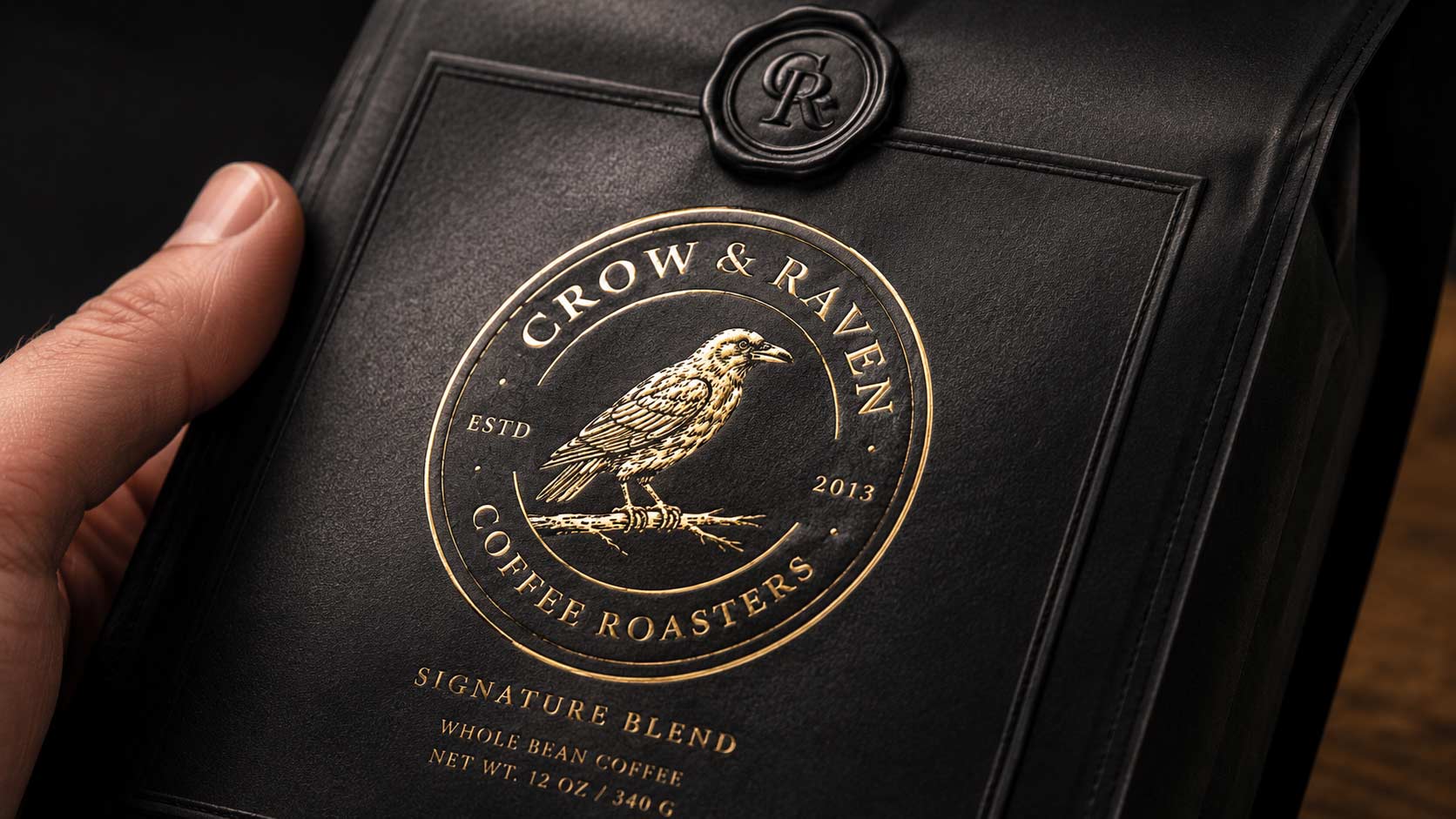
Spot UV: The Finish Everyone Underestimates
Spot UV is a clear gloss varnish applied to selected areas of the bag, against a matte or uncoated base. It does not add color. It adds shine and contrast. The brand mark, the holiday phrase, or a snowflake pattern catches the light while the rest of the bag stays flat. The trick spot UV plays is that the contrast is what sells. A holiday phrase printed in dark green ink on a matte bag is easy to overlook. The same phrase in dark green ink with a spot UV gloss layer on top almost glows when the bag turns under store lighting. The customer does not know why, but the bag looks more expensive. Spot UV is most often the right choice when you cannot justify the cost of foil but you still want a finish that elevates the bag. It is also the right finish when your brand identity is matte and minimalist. Foil reads as bold and traditional. Spot UV reads as quiet and modern. Match the finish to the brand. Spot UV adds about thirty to fifty cents per bag and three to seven days of lead time.Soft-Touch Matte: The Finish That Wins Without Trying
Soft-touch matte is a coating or laminate that gives the bag a velvety, almost rubbery surface. It is the finish you have probably touched on a high-end perfume box or a luxury chocolate bar. The customer does not know what the finish is called. They only know the bag feels different. That sensory difference does more for the perceived value of a holiday coffee than any other single upgrade. The math behind soft-touch is the most favorable on this list. It is applied across the whole bag, not as a custom die or stamp, so it scales cleanly across a print run. It also pairs with every other finish on this list. A black soft-touch bag with gold foil stamping and a debossed seal is the standard premium holiday look in the specialty coffee market because every element supports every other element. Soft-touch is the upgrade to start with if you are only choosing one finish for your holiday SKU. It applies across the entire bag, costs about twenty-five to forty-five cents extra, and gives you a base that supports any further upgrades you decide to add later.Holographic and Specialty Foils: When Loud Works
Holographic foil, rainbow shift foil, and color-shifting metallics are the loud option in the holiday lineup. They are the finish that catches the customer's eye from across an aisle. They are also the finish that ages poorly on a serious specialty brand and that some buyers find tacky. Reserve holographic for limited-edition or seasonal SKUs that lean into novelty. A Holiday Magic or Pono Glow name pairs well with a holographic accent. A serious single-origin from a named farm should never wear a holographic finish. The customer is buying the story of the coffee, and the bag should support that story, not compete with it. Cost and lead time match standard foil, plus a small premium for the specialty material.Stacking Finishes Is Where the Magic Happens
The single biggest mistake roasters make with holiday bags is choosing only one finish. Each finish does part of the work, and the combination does most of it. The standard premium holiday bag uses two or three finishes together. A soft-touch matte base, foil stamping on the logo, and spot UV on a seasonal accent or holiday phrase. The matte gives the bag its hand feel, the foil gives it the shelf catch, and the spot UV adds a final layer of contrast that catches the eye under retail lighting. The total upgrade cost typically lands between one dollar and one dollar fifty per bag against a flat printed bag, and the price the bag can carry typically lifts by six to ten dollars. The other useful pairing is spot UV with soft-touch matte. The matte creates a premium hand feel and the spot UV catches the light on selected areas. It is a quieter version of the foil combination, fits modern minimalist brands, and costs about half as much.When NOT to Upgrade the Bag
Not every coffee belongs in a finished bag. If your everyday retail price is below fourteen dollars for a twelve-ounce bag and your customers are price-driven, a twenty-two-dollar finished holiday bag will sit on the shelf. The buyer is not in that market. Match the bag to the customer.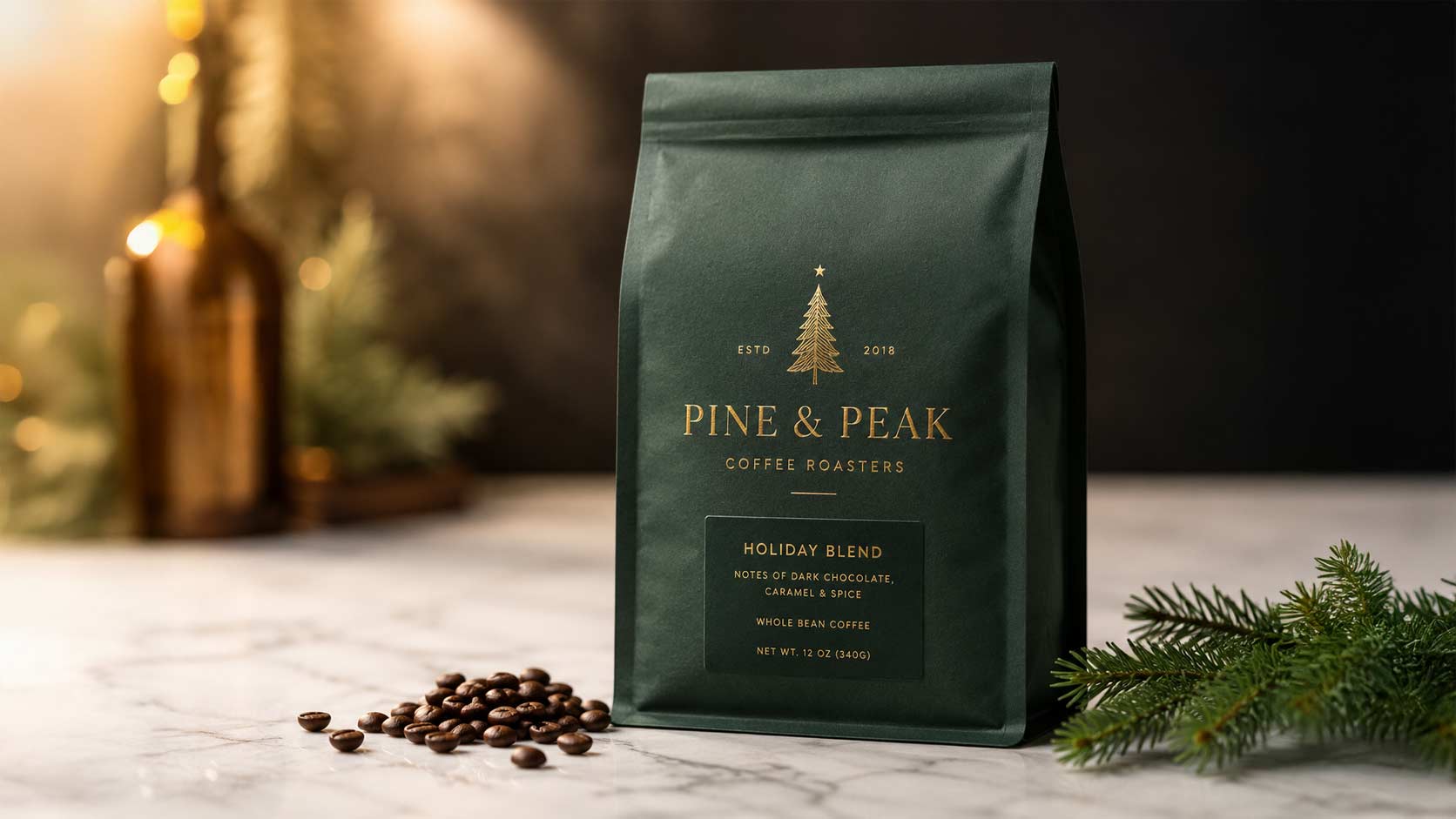 The other time to skip the finish is when the holiday SKU is a low-volume one-off being sold mostly online to existing customers who already trust the brand. The packaging is doing less work because the customer is not browsing. A clean printed bag with a holiday belly band wrapped around it can carry the same lift at lower cost.
Print Method and Order Timing
The right print method follows the volume. Digital packaging fits short holiday runs of two thousand to five thousand bags with full color and most finishes available. Rotogravure printing fits larger runs above five thousand bags and offers richer ink layers and tighter foil registration. Most holiday SKUs land in the digital range. The right time to start is now. A holiday SKU that ships to retail in early November needs to be in production by late August. A SKU shipping to direct customers in December has slightly more room, but die-cut work, foil stamping, and laminate finishes all add lead time that compounds. Plan backwards from the date the bag needs to be on the shelf, add two weeks of buffer for any finish work, and that is the latest possible week to place the order. For brands that pair their holiday lineup with sustainability messaging, eco-friendly digital printing can still support most of the finishes above. Soft-touch laminates and spot UV are compatible with lower-impact print processes, and a recyclable or compost-ready substrate does not have to mean a plain bag.Quick Answers for Holiday Coffee Bag Planning
*What is the most popular holiday coffee bag finish? Gold foil stamping on a dark soft-touch matte base. The combination delivers the strongest shelf catch and the most reliable price lift of any single upgrade in the specialty coffee market. How much does foil stamping add to a coffee bag? About forty to eighty cents per bag on a digital print run of one thousand bags. Larger rotogravure runs reduce the per-bag cost. When should I order holiday coffee bags? A coffee bag shipping to retail in early November needs to be in production by late August. Direct-to-consumer bags shipping in December can be ordered into early October if the print method and finishes are confirmed. Is soft-touch matte the same as matte ink? No. Matte ink is non-glossy printing ink. Soft-touch matte is a coating or laminate applied across the whole bag that creates a velvety surface the customer can feel. What is spot UV on a coffee bag? A clear gloss varnish applied to selected areas, such as a logo or a holiday phrase, while the rest of the bag stays matte. The shine catches the light without changing the color. Can I combine multiple finishes on the same bag?* Yes, and most premium holiday bags combine two or three. A common standard is a soft-touch matte base, foil stamping on the logo, and spot UV on a seasonal accent or holiday phrase.Make the Bag Carry the Holiday
A finished holiday bag is the cheapest upgrade in a specialty coffee lineup, and the one with the most reliable return. Soft-touch matte to start, foil stamping for the shelf catch, spot UV for the final detail. Time the order so the work has room to land, match the finish to the brand, and the bag does the selling on its own. At Savor Brands, the same print floor that handles your everyday bags can run a holiday SKU with full finishing, which keeps the brand consistent from October through January and gives gift buyers a reason to reach for your coffee first.Why Us?
 3x SCA Best New Product Award Winner
Industrial Compostable Packaging
Your Very Own White Label Mobile App
Pono Collective: Providing Coffee Education
Lower MOQs With Our Digital Print Process
Setting Trends While Elevating Your Brand
Contact Our Team!
Other Blogs of Interest


Holiday Coffee Packaging Design Tips for 2025
Must-Know Coffee Bag Design Tips for a 2025 Festive Glow! Designing a new coffee bag is exciting for the holiday season, but what many roasters don’t realize is how much detail goes into custom bag production and how often they need to adjust designs to fit printing capabilities. To make the proc...


How Unified Holiday Packaging Boosts Coffee and Cookie Sales
Why unified holiday packaging matters Holiday sales move quickly, and the brands that create the most profit are the ones that make every detail count. For cafes and small businesses, packaging plays a major role in how customers feel about seasonal treats. When your coffee bags and cookie pouches...


Custom Coffee Bags Explained: Stand Up Pouches
Stand Up Pouches have been a favorite for roasters and customers for many years. Its design to stand upright on shelves offers the perfect balance of practicality and presentation for many businesses. Why Choose Stand-Up Pouches? This bag style is known for its "more bang for its buck" due to it...


Kraft Coffee Bags: When Natural Paper Packaging Is the Right Call for Your Brand
Walk through a specialty coffee shop or a Saturday farmers market, and the kraft coffee bag tends to be the one that pulls your attention first. The brown paper exterior, matte and textured, gives a product a handcrafted quality that polished foil bags do not always match. Kraft coffee bags have earned...