Every April, Earth Month puts a spotlight on sustainable packaging, and coffee bags end up right in the middle of the conversation. Shoppers slow down in the aisle, flip the bag over, and look for a word that tells them this purchase is not just adding to a pile of waste that will outlast them. Three words show up more than any others: recyclable, compostable, and biodegradable. They sound like they are pointing in the same direction. They are not. Each one follows its own rules, depends on different conditions to actually work, and sends a bag to a very different final destination. For roasters deciding which packaging to order and for shoppers deciding what to trust, understanding the real differences in recyclable vs compostable coffee packaging is not just helpful. It is the whole point.
Biodegradable: The Broadest Claim With the Fewest Rules
Biodegradable is the most loosely defined of the three terms. Technically, nearly every organic material biodegrades given enough time. A conventional plastic bag will eventually break down. So will a piece of cardboard, a leather boot, and a metalized coffee bag. The word does not come with a required timeline, a regulated standard, or a certification that tells you how fast the process happens or under what conditions it needs to happen.
That lack of definition is the problem. A packaging manufacturer can print the word biodegradable on a bag without specifying whether it breaks down in ten years or ten thousand. Without heat, moisture, oxygen, and active microbial activity all working together in the right proportions, biodegradation slows to almost nothing in a standard landfill environment. Most landfills are designed to seal and contain waste, not break it down. That means a bag labeled biodegradable may sit undisturbed for centuries while the label continues to suggest the opposite.
Some biodegradable materials do break down relatively quickly under the right conditions, usually in soil or water. But those conditions are rarely where packaging actually ends up. Until a universal standard exists that defines what biodegradable must mean in practice, the label functions more as a marketing phrase than a verified environmental promise.
Compostable: A Stricter Standard With One Important Catch
Compostable packaging carries more weight than biodegradable because it is held to an actual standard. To earn a certified compostable label, a material must meet specific requirements for how quickly it breaks down, what it leaves behind, and whether the resulting compost is free of harmful residues or heavy metals. In the United States, the most recognized certification body is the Biodegradable Products Institute, known as BPI. In Europe, EN 13432 is the governing standard. In Germany, DIN Certco issues certifications that are widely accepted across international markets. These certifications mean the claim has been tested and verified, not just printed on a bag.
The catch is that compostable does not mean the same thing in every setting. There are two types, home compostable and industrial compostable, and they are not interchangeable. Home compostable materials are designed to break down in a backyard pile at ambient outdoor temperatures. They work without any special equipment or controlled environment. The trade-off is that home compostable packaging typically cannot deliver the same moisture and oxygen barrier performance as conventional film, which limits its usefulness for roasted coffee that needs strong freshness protection over weeks or months.
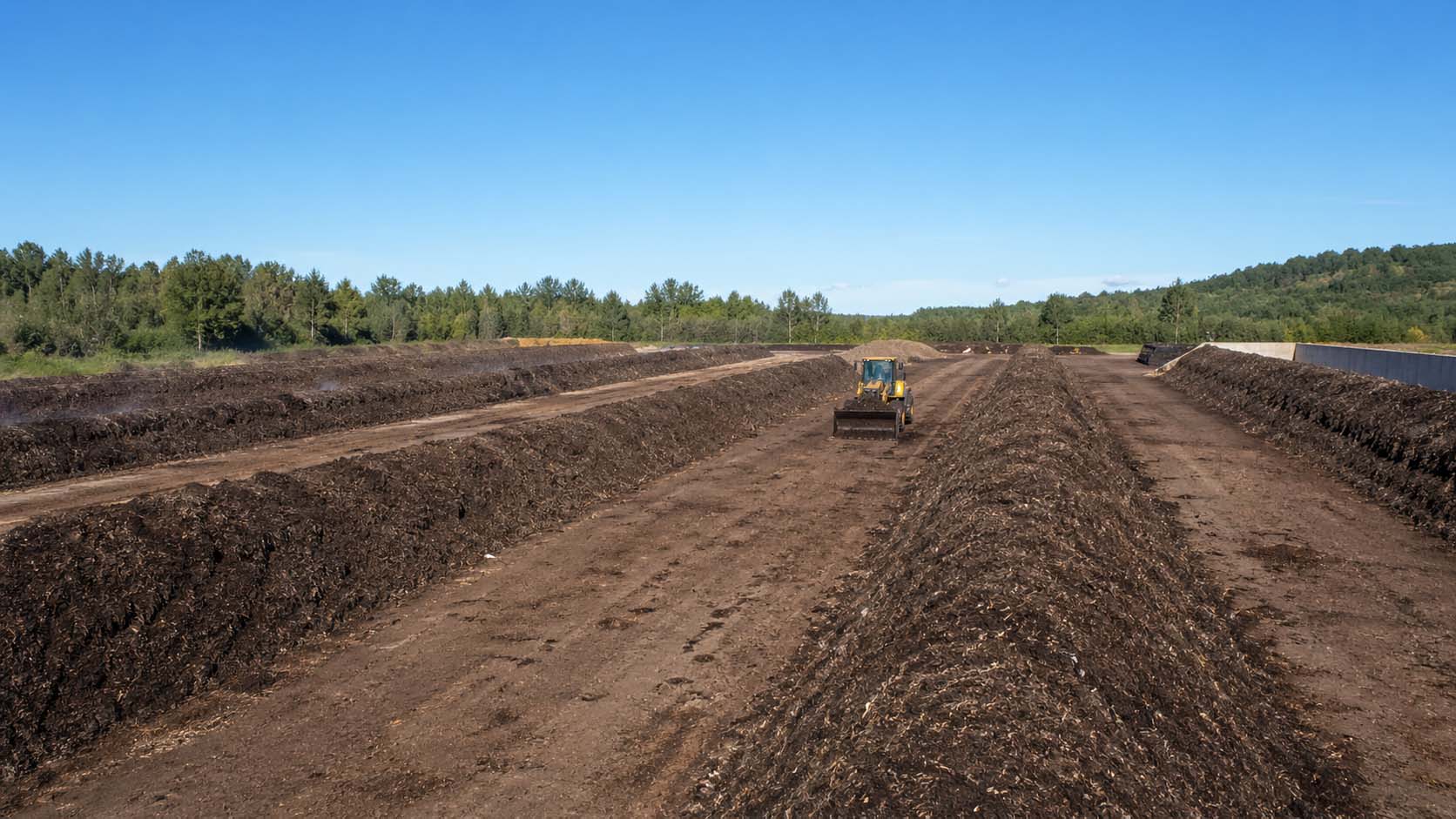
Industrial compostable materials, also called commercially compostable, are built to break down inside a large-scale composting facility. These facilities maintain sustained temperatures above 130 degrees Fahrenheit, controlled humidity, and active microbial activity that accelerates the breakdown process. Without those conditions, an industrially compostable bag does not break down properly. Placing it in a home compost bin, a curbside organics cart, or a landfill will not produce the outcome the label describes.
Most high-performance compostable coffee bags on the market today are industrial compostable, not home compostable. The materials, typically a plant-based film called polylactic acid or PLA derived from corn starch or sugarcane, combined with compostable kraft paper and certified closures, deliver the barrier protection coffee needs during its useful life and then break down into carbon dioxide, water, and biomass when processed in the right facility. Industrial compostable bags do carry a shelf life trade-off. They typically protect roasted coffee for three to four months, which is shorter than conventional multilayer film but works well for most specialty roasters moving fresh product regularly.
When evaluating a compostable claim, these are the distinctions worth looking for: - Look for a recognized certification such as BPI, DIN Certco, or TUV Austria
- Confirm whether the certification is for home or industrial composting
- Ask whether the zipper, valve, and inks are also certified compostable, not just the film
- Know whether commercial composting infrastructure is actually available to your customers
Recyclable: The Most Familiar Label, and Still Complicated
Recyclable feels like the most straightforward of the three terms because most people have been sorting recyclables since childhood. But coffee packaging is where the familiar rules get complicated, and it comes down to how the bags are made.
Most specialty coffee bags are constructed from multiple layers of different materials laminated together. A typical high-barrier bag might combine layers of polyester, metalized film, polyethylene, and adhesive bonding agents. Each layer serves a specific purpose in protecting freshness, blocking oxygen and moisture, and surviving the handling of shipping and retail display. That layered construction is exactly what makes conventional coffee bags so effective at their job. It is also what makes them nearly impossible to recycle through standard curbside programs.
Municipal recycling programs almost universally reject flexible multilayer packaging. The different materials bonded together cannot be cleanly separated, and the resulting mixed material stream has very limited demand from recyclers. When a multilayer coffee bag says it is recyclable, the claim is often accurate in the narrow sense that the material can theoretically be processed. What it does not always communicate is that practical recycling requires a specialized facility and a specific collection pathway, not the blue bin at the end of the driveway.
Drop-off programs at participating retail locations offer the most common accessible route. Consumers carry empty bags to collection points where the material is sent to specialty film recyclers. That system works, but it depends entirely on consumer participation and on a drop-off location being within reach of your customers. Without that infrastructure in place, a recyclable label describes a possibility rather than a predictable outcome.
The coffee packaging industry is actively developing monomaterial bags, where every layer is made from the same base material, making the film far easier for recyclers to process cleanly. That technology is advancing, but barrier performance for roasted coffee is still catching up to what multilayer construction currently delivers.
Where Savor Brands Has Taken a Real Stand
Rather than choosing a label and hoping customers do not look too closely, Savor Brands built two programs around what actually happens to a coffee bag after the coffee is gone. Both programs connect to real infrastructure and produce documented, verifiable outcomes.
The first is the R+R® Program, which stands for Repurpose and Reprocess. This award-winning upcycling initiative took home the 2021 SCA Best New Product Award and is designed specifically for U.S.-based roasters using standard metalized multilayer coffee bags. Enrolled roasters receive an R+R collection box and a prepaid return shipping label. When the box is full of empty bags, it ships directly to upcycling partners. ByFusion converts the collected film into ByBlocks used in construction projects. HydroBlox transforms it into drainage systems installed in landscaping and commercial builds. Once the bags are processed, roasters receive a digital certificate confirming their packaging completed the cycle. A bag that could not be recycled through conventional means becomes a physical building material with a documented second life. Roasters can learn more and enroll at rplusrprogram.com.
HYDROBLOX: All boxes must be approved prior to shipment and must be packed in designated R+R boxes. Any boxes that are not in R+R boxes or do not have an approved label will not be accepted.
The second program is Compost+, Savor Brands' industrial compostable packaging line. Compost+ bags are built from a certified laminate film combined with premium compostable kraft paper, and every component, including the zipper closure and the degassing valve, is also certified industrially compostable. The bags carry DIN Certco certification and are printed using compostable, toxin-free inks throughout, so the sustainability runs through every element and not just the outer layer. Compost+ bags deliver the barrier protection roasted coffee needs and are available through digital printing at low minimum order quantities, making them accessible for roasters at every stage of growth.
Together, R+R® and Compost+ address the two most practical paths for sustainable coffee packaging today. R+R gives a real, upcycling end-of-life solution to the standard multilayer bags that conventional recycling cannot handle. Compost+ gives roasters a certified plant-based option for customers who have commercial composting access and want the full story behind what happens to the bag. Neither program asks anyone to take a claim on faith.
How to Choose the Right Claim for Your Brand
The right sustainable packaging path depends on your customers, your distribution, and what you can support honestly. A roaster selling through local cafes and farmers markets may have access to commercial composting through a community partner, which makes Compost+ a natural and easy-to-communicate choice. A roaster shipping nationally may find R+R® a stronger story because the collection infrastructure travels with every order, regardless of where the customer is located. Brands that are not ready to change their packaging material can still participate in R+R® without switching bag styles or disrupting current production.
Whatever direction fits your brand, the language on the bag should match what the bag can genuinely deliver. Shoppers are reading more carefully than they used to, especially during Earth Month, and the gap between a claim that means something and one that does not is becoming easier for them to spot. Specific, verifiable sustainability language builds trust. Vague claims erode it over time.
What You Print on the Bag Should Be Something You Can Stand Behind
Recyclable, compostable, and biodegradable are not three ways of saying the same thing. Each one works differently, lands differently, and requires different conditions to deliver on what it promises. The roasters and food brands that earn lasting loyalty from sustainability-minded customers are the ones who understand the real differences in recyclable vs compostable coffee packaging and then choose the path they can genuinely support and clearly explain.
Savor Brands built the R+R® Program and the Compost+ line because a real program beats a good label every time. If you want to talk through which option fits your roastery or food brand, the Savor Brands team is ready to help.