Why Packaging Matters More Than Most Jerky Brands Expect
Beef jerky looks tough, but it is actually easy to ruin. Oxygen gets in and turns the fat rancid. Moisture sneaks through cheap film and softens the texture, then invites microbial growth. Either way, your product is ruined before the customer ever opens it. That means the packaging you choose is not just a branding decision. It is a food safety decision.
The good news is that [food packaging](/food-packaging/) technology has advanced a lot, and small brands now have access to the same high-performance materials that large national brands have used for years. You do not need a massive production run to get a bag that genuinely protects your product and looks great doing it.
What Barrier Film Actually Means
When people talk about barrier film for beef jerky packaging, they are talking about the layers of material laminated together to build the bag. Each layer does something specific, and the combination of those layers determines how well the bag holds up against oxygen, light, and moisture.
The outer layer is usually PET, which is a type of polyester film. It gives the bag its structure, makes it printable, and handles the wear and tear of being on a shelf or in a customer's bag. The middle layer is where the real barrier work happens. The inner layer is a heat-sealable film, typically polyethylene, that fuses the bag closed during production and keeps the seal strong.
For the middle barrier layer, jerky brands have a few options. Each one has a different price point and a different level of protection.
- MET-PET (metalized polyester): A popular mid-range option that reflects light and blocks both oxygen and moisture. It gives bags that shiny silver or gold interior look and is a strong performer for most shelf-stable jerky.
- Aluminum foil: The gold standard for barrier protection. Foil blocks nearly everything and is the right call if your jerky has a higher fat content or a longer intended shelf life. It adds a little cost but delivers maximum protection.
- EVOH (ethylene vinyl alcohol): A clear option that offers excellent oxygen resistance without the metallic interior. Good choice if you want a clear window on your bag while still keeping oxygen out.
Most quality beef jerky bags use a multi-layer laminate that combines two or three of these materials. A typical structure might be PET on the outside, a metalized or foil layer in the middle, and polyethylene on the inside. That combination handles everything jerky needs.
Bag Styles That Work for Jerky
Not every bag style is the right fit for beef jerky, and the one you choose affects how your product looks on a shelf, how easy it is for customers to use, and how much space it takes up during shipping and storage.
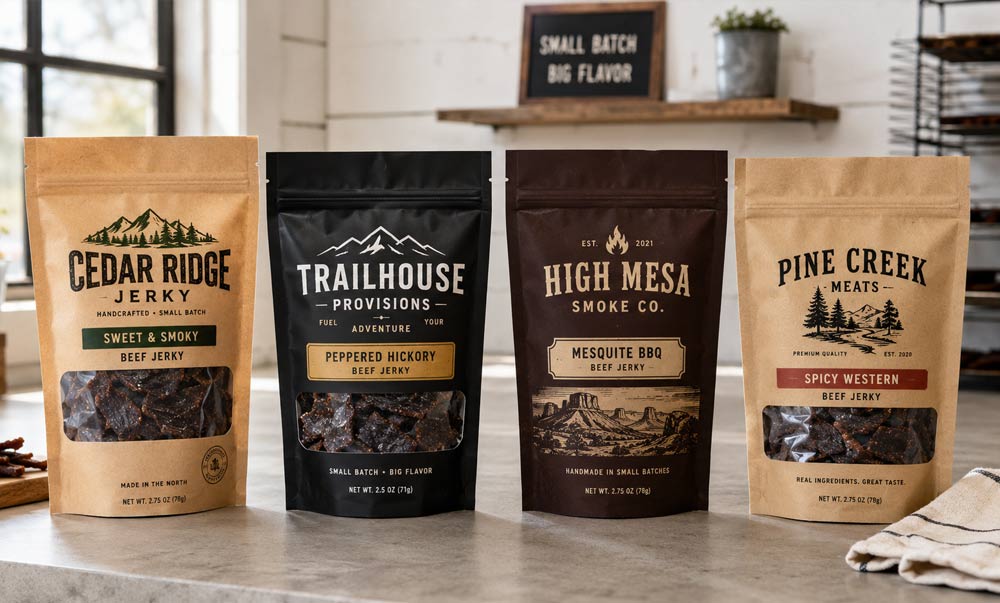
The stand-up pouch is the most popular choice for retail jerky brands. It has a gusseted bottom that lets it stand upright on a shelf, giving you a full front panel to work with for your design. Most stand-up pouches for jerky come with a resealable zipper, which customers expect, and an optional clear window that lets buyers see the product inside. The window builds trust and encourages impulse purchases.
Lay-flat pouches are another common option, especially for smaller quantities or sample sizes. They are sealed on three or four sides and lie flat. They cost a little less to produce than stand-up pouches, ship more efficiently, and work well for brands selling online or at farmers markets where display shelving is not always available.
Roll stock is worth mentioning for brands that have their own filling equipment or work with a co-packer. Instead of pre-made bags, roll stock comes as a continuous film that your equipment forms, fills, and seals into finished bags. It is more cost-efficient at higher volumes and gives you a clean, tight seal every time.
For most small and growing jerky brands just getting into [custom packaging](/food-packaging/), the stand-up pouch with a zipper and a barrier laminate is the right starting point. It is practical, it looks professional, and it gives you the flexibility to add windows, matte finishes, or spot gloss later as your brand grows.
Printing: Digital vs. Rotogravure
Once you have the right film and bag style, the printing process is what brings your brand to life on the shelf. There are two main options, and the right one depends on your order volume.
[Digital packaging](/digital-packaging/) is built for small runs. There are no printing plates to create, which means lower upfront costs and faster turnaround times. If you are running a few hundred to a few thousand bags, digital is almost always the smarter financial decision. It also makes seasonal flavors, limited-edition runs, and design updates easy because you are not stuck with a large inventory of outdated bags.
[Rotogravure](/rotogravure-bags/) is the right call when your volume gets into the tens of thousands. The plates cost more to set up, but the per-bag cost drops significantly at scale. Rotogravure also delivers extremely consistent color reproduction across large runs, which matters when you are trying to match a specific brand color precisely on every single bag.
Most jerky brands starting out will begin with digital printing and move to rotogravure once their volume justifies the switch. That is a natural and smart progression, and a good packaging partner will help you understand exactly when that transition makes sense.
Features That Make a Real Difference
A few add-ons are worth budgeting for on your first order because they directly affect the customer experience and the perceived quality of your product.
A resealable zipper is essentially non-negotiable for jerky. Customers expect to be able to close the bag after opening it. Without a zipper, you are telling them the bag is single-use, which undercuts your value.
Tear notches are small but useful. They are the small cuts on the side of the bag that give customers a clean starting point to open it without fighting the seal. They are inexpensive and every bag should have one.
A clear window is optional but worth considering. It lets the customer see the actual product, which builds confidence and often drives purchase decisions. If your jerky looks good, show it off.
Matte finishes are trending in [food packaging](/food-packaging/) right now. They reduce glare under retail lighting, feel premium in the hand, and photograph well for online listings. Gloss is still a solid choice for bold, colorful designs, but matte is worth considering if your brand identity leans toward the craft or artisan end of the market.
Getting the Right Minimum Order for Your Stage of Business
One of the most common hesitations small jerky brands have about custom packaging is the minimum order quantity. The concern is real, but the landscape has shifted. [Digital printing](/digital-packaging/) has lowered the floor significantly, and brands can now access quality custom bags at order quantities that would not have been possible a few years ago.
Starting with a smaller run gives you the chance to test your design in the real world, get customer feedback, and make adjustments before committing to a larger inventory. That flexibility is genuinely valuable, especially if you are launching a new flavor or refreshing a label.
As your volume grows, the cost per bag goes down. Ordering more at once means better pricing, and moving to rotogravure when the time is right can bring costs down further. The key is to work with a packaging partner who understands where you are now and can support where you are going.
What to Check Before You Order
Before placing a custom jerky packaging order, there are a few things worth confirming with your supplier.
First, ask specifically about the barrier structure of the film. Do not just accept the word "barrier film" as a complete answer. Ask which layers are used and what the oxygen transmission rate is. A quality supplier will be able to answer that clearly.
Second, confirm the seal strength. Jerky bags take more physical handling than most food pouches. They get squeezed, tossed into bags, and shipped. A weak seal is a liability.
Third, ask about fill testing. Send your actual product to be tested in the bag before your full order prints. This confirms that the film, the seal, and the zipper all work with your specific product weight and texture.
Finally, make sure your artwork is submitted at the correct resolution and that your brand colors are called out in CMYK or Pantone values. Color accuracy at print is much easier to control when the reference is clear from the start.
The Shelf Is the Final Test
All the barrier film specs and printing options in the world come down to one moment: when a customer sees your bag on the shelf or in an online listing and decides whether to pick it up. Good beef jerky packaging makes that decision easy. It signals freshness, quality, and brand confidence before the customer reads a single word.
The brands that get this right are not spending more than everyone else. They are just making smarter decisions about material, bag style, and print process from the start. And they are working with a packaging partner who asks the right questions before the order goes to print.
If you are building a jerky brand and want custom packaging that works from day one, Savor Brands can help. We work with small food brands across the country and offer [digital printing](/digital-packaging/) for low minimums, high-barrier film options, and the kind of hands-on guidance that makes the whole process easier than you expect.