

Why Supplement Brands Need Better Powder Packaging
The supplement market has never been more competitive. Protein powders, pre-workout blends, collagen peptides, greens powders, and functional supplements are everywhere, and the brands that win are not always the ones with the best formula. They are often the ones with the best food packaging. For small supplement brands, that reality is both a challenge and an opportunity. The right food packaging protects your product, communicates your quality to a health-conscious buyer, and positions you on the shelf right next to brands with much larger budgets. This guide covers what you need to know about flexible food packaging for powder products, from barrier films and bag styles to certifications and printing options that make sense at small-batch scale.Why Powders Demand More from Their Packaging
Protein powders and supplement blends are more sensitive to their environment than most food products, and that sensitivity raises the standard for what good food packaging needs to deliver. Moisture is the biggest threat. Even a small amount of humidity that gets through a compromised seal can cause powders to clump, degrade in texture, and lose potency over time. Oxygen is the second concern, since oxidation can affect both the flavor and the effectiveness of certain active ingredients. Light exposure can also break down sensitive compounds, particularly in products with natural colorants or photosensitive vitamins. What all of this means for packaging is that the bag needs to act as a sealed, stable environment from the moment it is filled until the moment the customer opens it. A thin, low-barrier film that might work fine for a dry snack product simply does not have the performance specs to protect a powder supplement over a standard shelf life. Getting the barrier right is where food packaging decisions for this category have to start.Barrier Films That Protect What Is Inside
The most reliable barrier options for powder supplements are aluminum foil laminates and metallized films. Aluminum foil laminate delivers the strongest protection available in flexible packaging. It blocks moisture, oxygen, and light almost completely, making it the first choice for high-potency supplements where ingredient stability is non-negotiable. Most major supplement brands rely on foil laminate for exactly this reason. Metallized films, which have a thin layer of metal vapor-deposited onto a plastic base film, offer strong barrier properties at a slightly more accessible cost. They are not quite at the level of full foil laminate for extreme moisture or oxygen resistance, but they perform well for a wide range of supplement products and open up more options for print finishes like matte, gloss, or soft-touch effects. EVOH (ethylene vinyl alcohol) is a barrier option worth knowing about as well. It performs well for oxygen resistance and works in transparent or partially clear packaging designs where brands want the product visible through the bag. For most powder products, though, full opacity with a foil or metallized barrier is the more common choice because it also eliminates light degradation from the equation.Bag Styles That Work for Supplement Products
Stand-up pouches are the dominant bag format for protein powders and supplements, and the reasons are practical. They hold their shape upright on a shelf, which matters when buyers are scanning a row of products. They offer a large printable surface on the front and back panels, giving you room for branding, supplement facts, ingredient lists, certifications, and QR codes. They scale well across multiple sizes, from single-serve sample pouches to large family-sized bags. And they accept a resealable zipper at the top without adding much complexity to the structure. Flat bottom bags, also called box bottom bags, are increasingly popular in the premium supplement space. The wide, stable base allows the bag to stand without tipping, which is helpful for heavier products or larger fill weights. The flat base also creates a fifth print panel at the bottom of the bag, giving brands an additional surface to work with. Many supplement brands use that bottom panel for a logo, a certification mark, or a short brand statement. Spouted pouches appear less often in the traditional protein powder space, but they show up regularly for liquid supplements, ready-to-mix formats, and travel-size products. If your supplement line includes a liquid concentrate, a wellness shot, or a powder designed to be poured directly into a shaker bottle, a spouted pouch is worth exploring.Why Resealable Zippers Are Non-Negotiable
Most protein powders and supplement blends are used repeatedly over several weeks. A customer scooping pre-workout every morning or adding collagen to their coffee daily will open and close that bag dozens of times before it is empty. The zipper on the bag is not a minor feature. It is one of the highest-contact points in the entire product experience, and it has a direct effect on freshness. Press-to-close zippers are the standard option and work reliably for most supplement pouches. Slide zippers, which use a small slider to open and close the bag, offer a more premium experience and tend to be easier to reseal when hands are coated in powder. That matters more than it sounds for a customer in a gym environment or kitchen who has just scooped protein into a blender. For brands positioning themselves at a higher price point, a slide zipper is a small packaging detail that signals quality without adding much to the per-unit cost.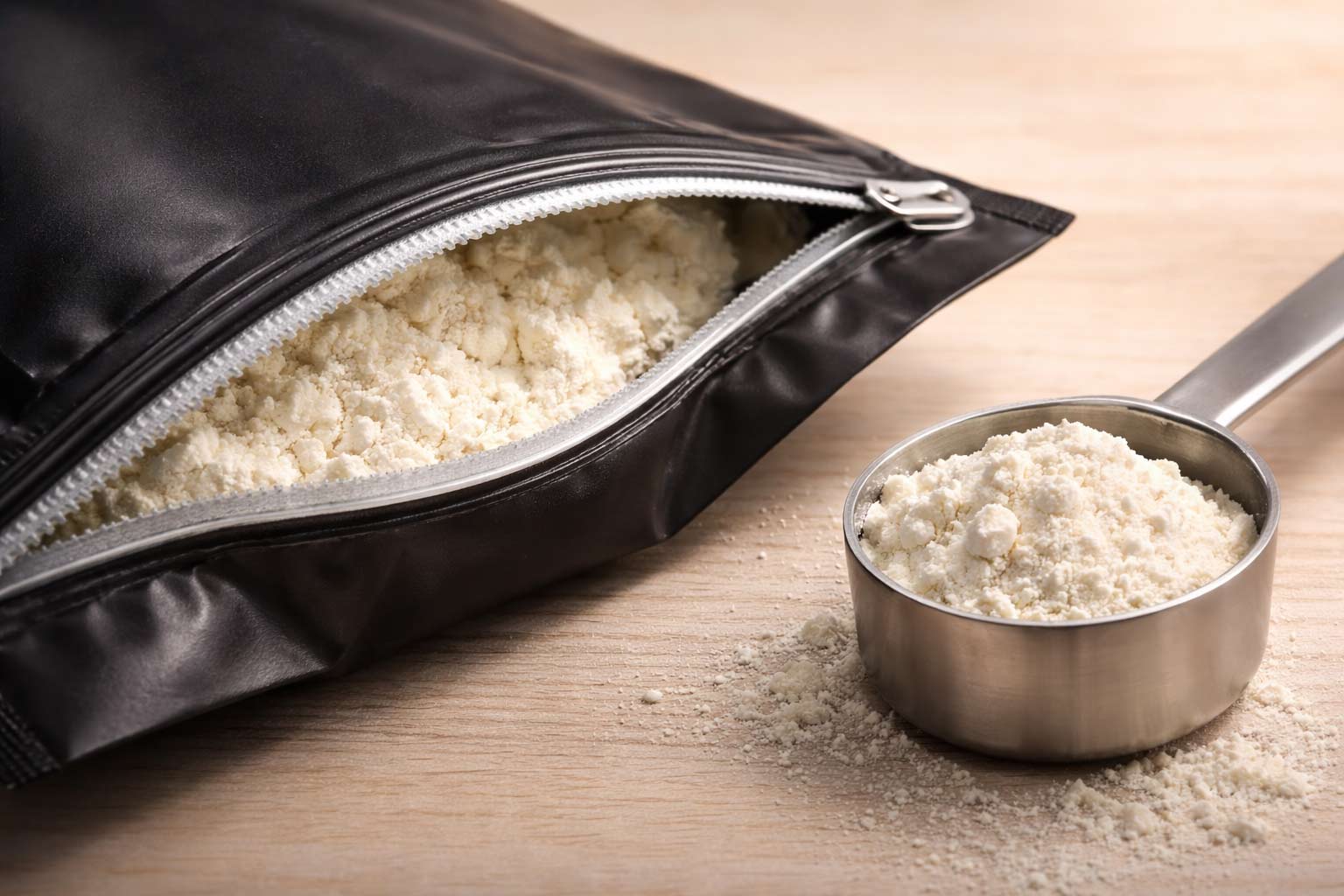
Food-Grade Certifications and What They Mean for Packaging
Any film, ink, or adhesive that contacts a food or supplement product must meet food contact material standards. In the United States, that means compliance with FDA regulations for materials intended for food contact. This is a foundational requirement for any food packaging in the supplement category, and it is not optional. When you work with a qualified packaging supplier, this compliance is already built into the materials being sourced and the way they are produced. It is not something you certify yourself, but it is something you should confirm with your supplier before placing an order. BPA-free is a specific claim that resonates strongly with health-focused supplement buyers. It is worth making visible on your bag, either as a printed callout or as part of a certification mark. Other relevant claims depending on your product category include non-GMO, certified organic, kosher, and halal. These appear on the packaging itself as labeling elements, separate from the bag material certifications. For brands selling into retail or through distribution channels, packaging specs will need to align with retailer requirements around labeling placement, barcode positioning, and product identification. Getting those requirements right during the design phase is much easier than correcting them after bags are already printed. A packaging supplier with experience in food and supplement categories can flag those requirements early in the process.- BPA-free claims are a strong consumer trust signal for health-focused buyers
- FDA food contact compliance is built into the materials your supplier sources
- Non-GMO, organic, kosher, and halal claims are printed on the bag as labeling elements
- Retail-ready specs around barcodes and label placement should be confirmed before design is finalized
How Digital Printing Helps Small Brands Look Like Big Ones
One of the most consistent challenges for small supplement brands is that professional custom food packaging has traditionally required large minimum order quantities to justify the setup costs. Rotogravure printing, which produces the sharp, vibrant print quality you see on major retail supplement brands, requires engraved cylinders that represent a significant upfront investment. That cost makes sense at high volume. It does not make sense for a brand that is still building its customer base or testing new SKUs. Digital printing has changed that equation. There are no plates or cylinders involved, which means setup cost is eliminated and minimum order quantities can come down significantly. Print quality is excellent, color reproduction is consistent, and design changes between runs carry no additional tooling fees. For a supplement brand with multiple flavors or product lines, digital printing means you can maintain a cohesive brand look across all of your SKUs without committing to large quantities of each individual item. Savor Brands offers digital printing on custom flexible packaging with low minimum order quantities, which makes it possible for a growing supplement brand to launch with fully custom, professionally printed bags from day one. As volume grows and the economics of rotogravure printing begin to make sense, the transition to higher-volume production is a natural next step that brings the per-unit cost down considerably.When the Bag Does Its Job, the Product Gets a Fair Shot
A supplement customer browsing a shelf or a website is making a judgment in seconds. The food packaging tells them whether the brand is serious, whether the product is worth the price, and whether it is the kind of company they want to trust with something they are putting in their body. Getting that right is not just about aesthetics. It is about barrier films that protect what is inside, bag structures that hold up through daily use, certifications that back up the claims on the front panel, and print quality that holds its own next to brands with much larger food packaging budgets. For small supplement brands, flexible food packaging done right is one of the fastest ways to look like a legitimate player in a competitive market. Reach out to Savor Brands to request samples, talk through bag style options, and find out which print tier makes sense for your current volume.Why Us?
 3x SCA Best New Product Award Winner
Industrial Compostable Packaging
Your Very Own White Label Mobile App
Pono Collective: Providing Coffee Education
Lower MOQs With Our Digital Print Process
Setting Trends While Elevating Your Brand
Contact Our Team!
Other Blogs of Interest


Custom Coffee Bags and Food Packaging: Grease, Oils, and Film Barriers Explained
Grease, Oils, and Freshness: Why Food Bags and Coffee Bags Are Not Built the Same At first glance, food packaging and coffee packaging can look similar. They might both be stand-up pouches. They might both be sealed, printed, and “barrier” films. But the problem they are solving can be very differe...


Seal Strength Made Simple for Coffee and Snack Packaging
Seal Strength 101: The Simple QC Fix That Stops Coffee Bag Leaks Leaky coffee bags and snack pouches are more than a small annoyance. They can ruin product freshness, waste inventory, and hurt customer trust. At Savor Brands, quality control often comes down to one detail many teams overlook: seal...


Coffee Bag Style Pouches for Foods That Belong Nearby
Stand-Up Pouches That Sit Perfectly next to Coffee Bags If your product belongs near coffee, your packaging should too. Stand-up food packaging pouches are in the same family as coffee bags, which makes them a natural choice for brands that want a clean, lined-up shelf look. These pouches share a f...


Hawaii's Best Cost Effective Packaging for Freeze Dried Candies and Snacks
Did you know that Savor Brands offers cost effective packaging with quick lead times and low minimum order quantities for small businesses like yours! Easily upgrade your packaging for your freeze-dried candies or snacks with our various options and offerings. Need suggestions? Our dedicated team is here to assist you from the very beginning. Obtaining custom packaging doesn't have to be expensive or complicated. Contact us to get a quote and start your project today!