

The Rise of Coffee-Flavored Protein Snacks
The coffee-flavored snack market is moving fast. Mocha protein bars, espresso energy bites, cold brew granola blends, and chocolate-covered coffee almonds are showing up in gyms, specialty retailers, and coffee shops across the country. They appeal to people who want their nutrition and their coffee ritual to overlap, creating real space for small brands that know their product and are ready to build something around it. But a great recipe alone does not get a bar onto a retail shelf or into a repeat purchase order. Protein bar packaging has to do real work. It needs to protect ingredients that are more demanding than most dry snack products, communicate quality to buyers in seconds, and hold up through the entire supply chain. Brands that treat packaging as an afterthought find out quickly what that decision costs them.Why Coffee-Flavored Protein Bars Need Better Packaging
Coffee-flavored protein bars and energy snacks are not simply coffee products in a different form. They are food products with layered ingredient profiles that may include chocolate coatings, nut butters, oat and grain bases, natural sweeteners, real espresso powder, or coffee extract. Each ingredient creates its own packaging demand. Chocolate and nut-based ingredients can cause grease migration, where natural fats work toward the outer film layer during storage and show up as oily marks on the package surface. Coffee powder and natural coffee flavoring carry aroma compounds that can escape through packaging if the barrier is not strong enough to hold them in. Moisture can also compromise texture and shelf life if the seal or film structure cannot manage it. These are not small details. A coffee-flavored protein bar that arrives at a retail account with a greasy wrapper, softened texture, or faded coffee aroma is a bar that may not come back on the next purchase order. The packaging has to maintain the product experience from the production line all the way to the moment the customer takes the first bite. Getting that right starts with understanding what each ingredient requires from the structure around it.The Protein Bar Packaging Formats That Small Snack Brands Actually Use
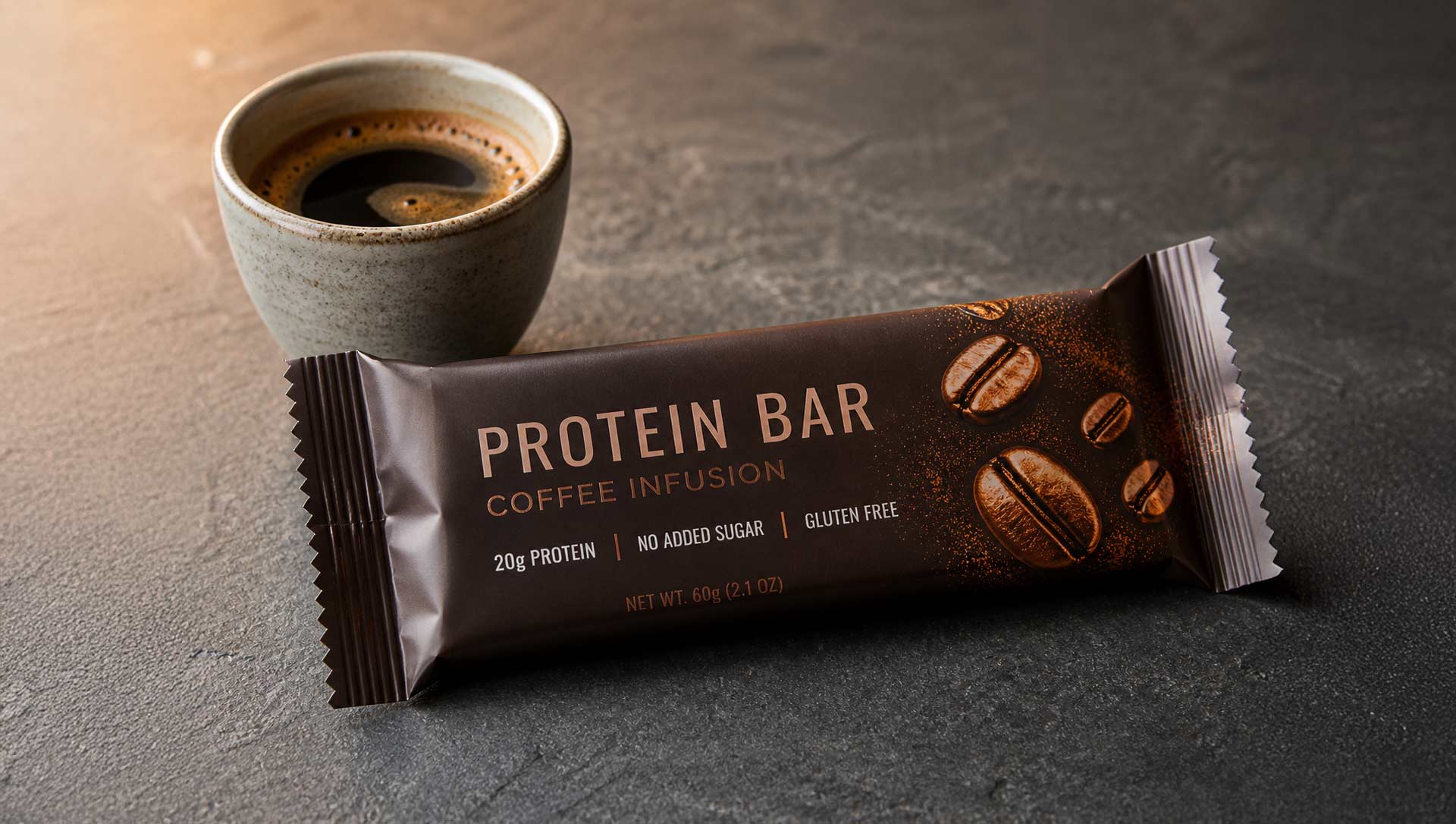
The most common format for individual protein bars and energy bars is the flow wrap. This format wraps tightly around a single bar with a center seal running down the back and heat-crimped seals at each end. Flow wrap is efficient, familiar to consumers, and practical at production scale. It protects the bar from handling damage and keeps the product fresh when the right barrier film is used. For brands selling individual bars at checkout counters, gym accounts, or grab-and-go retail, flow wrap remains the standard because it does its job without adding unnecessary cost or complexity. Stand-up pouches give snack brands a useful alternative, especially for multipacks, bite-sized coffee snacks, or resealable formats where the customer is not finishing the bag in one sitting. A stand-up pouch with a resealable zipper works well for coffee-flavored granola, espresso almonds, mocha energy bites, or trail mix-style blends. The upright format creates a strong visual presence on shelf and offers more printable surface for design, ingredient information, certifications, and brand messaging than a single-serve bar wrapper can provide. Flat bottom bags are worth considering for snack brands positioning themselves in the premium or specialty retail space. The wide, stable base allows the bag to stand without support, and the structure creates a more substantial presence that signals quality on a retail shelf. For a coffee-flavored snack brand that wants to sit alongside whole bean coffee, artisan chocolate, or specialty food products, a flat bottom bag communicates that the brand belongs in that company.- Flow wrap for individual bars sold at checkout, gym accounts, and grab-and-go retail
- Stand-up pouches for multipacks and resealable bite-sized coffee snack formats
- Flat bottom bags for premium positioning in specialty retail environments
What the Barrier Film Has to Do for Coffee-Flavored Products
Barrier film is the structural layer in flexible packaging that determines what passes through the bag and what stays out. For coffee-flavored protein bars and snacks, the barrier requirements are more demanding than most dry snack products, and knowing why helps brands choose the right film structure from the beginning. Grease resistance is the first requirement. Any snack containing chocolate, peanut butter, almond butter, or coconut oil needs a film that prevents fats from migrating toward the outer surface. A film without adequate grease resistance will develop oily spots on the exterior during storage, which signals spoilage to a buyer even when the product inside is perfectly fine. Grease resistance is built into the film structure itself and has to be specified correctly at the sourcing stage. Moisture barrier is equally critical. A protein bar that absorbs humidity will soften, lose its texture, and potentially go bad before its printed expiration date. For products containing real coffee powder or extract, moisture also speeds up the breakdown of the natural aroma compounds that give the product its character. Keeping outside humidity out, and managing moisture from the ingredients inside, requires a film that allows very little humidity to pass through the surface over time. Aroma retention is the third factor that matters specifically for coffee-flavored products. Part of what makes a coffee snack worth buying is the moment the bag is opened and that coffee aroma comes forward. That experience is part of the product, and a film that allows natural aroma compounds to slowly escape through the packaging is quietly eroding the most compelling thing about the product. Aluminum foil laminates offer the strongest aroma retention available in flexible packaging. High-barrier metallized films are a close second and open up more options for print finishes while still performing well across the shelf life of most snack products.- Grease resistance prevents fat migration and oily exterior marks on chocolate and nut-based snacks
- Moisture barrier protects texture and preserves coffee aroma compounds throughout shelf life
- Foil laminate and high-barrier metallized films keep the coffee aroma locked in until the bag is opened
Design and Finish Choices That Earn Attention on the Snack Shelf
Coffee-flavored snacks occupy a specific visual position in the market. They pull from coffee culture aesthetics, deep browns, warm creams, espresso tones, and confident typography, while still needing to communicate performance and nutrition to a health-focused buyer. The protein bar packaging design has to speak to both sides of that identity without looking pulled in two directions. Matte finishes are the dominant choice for health-oriented snack brands because they project a clean, premium quality that resonates with buyers who read labels before they buy. Soft-touch matte takes that a step further by adding a tactile quality to the bag, a smooth surface that distinguishes the product from commodity packaging the moment someone picks it up. For coffee-flavored products, an earthy matte palette in warm browns and neutral tones reinforces the coffee identity without requiring an elaborate design treatment. Spot gloss and metallic accents create contrast against a matte base and are particularly effective for energy-focused snack brands that want to signal performance alongside a natural or craft positioning. A metallic coffee bean graphic or a foil product name on an otherwise matte wrapper creates visual tension that pulls the eye across a crowded shelf. These finishing elements are more accessible at small-batch scale through digital printing than most snack brands expect, and they do not require a large production commitment to execute well.Why Digital Printing Is the Right Starting Point for Protein Bar Packaging
Custom protein bar packaging used to require a large volume commitment upfront. Rotogravure printing, which delivers the color consistency used by major snack brands at high volume, involves engraved printing cylinders that carry a real setup cost. That cost makes sense when you are ordering hundreds of thousands of units. It is harder to absorb when you are launching a new coffee flavor, testing a new retail channel, or building a snack brand that is still finding its footing. Digital printing removes that barrier. There are no cylinders, no plates, and no tooling fees, which brings minimum order quantities down to a level that works for small and growing snack brands. A coffee snack brand with a mocha version, an espresso version, and a cold brew version of the same bar can have each one in its own distinct custom wrapper without paying a separate setup cost for each. Design updates between runs are clean and fast. Seasonal formats and limited releases are practical rather than expensive. Savor Brands offers digital printing on custom flexible packaging with low minimum order quantities, making it possible for a new coffee snack brand to come to market with protein bar packaging that looks at home in specialty retail from the very first order. As volume grows and the economics of rotogravure production begin to make sense, the transition to high-volume printing is a natural next step that brings the per-unit cost down significantly.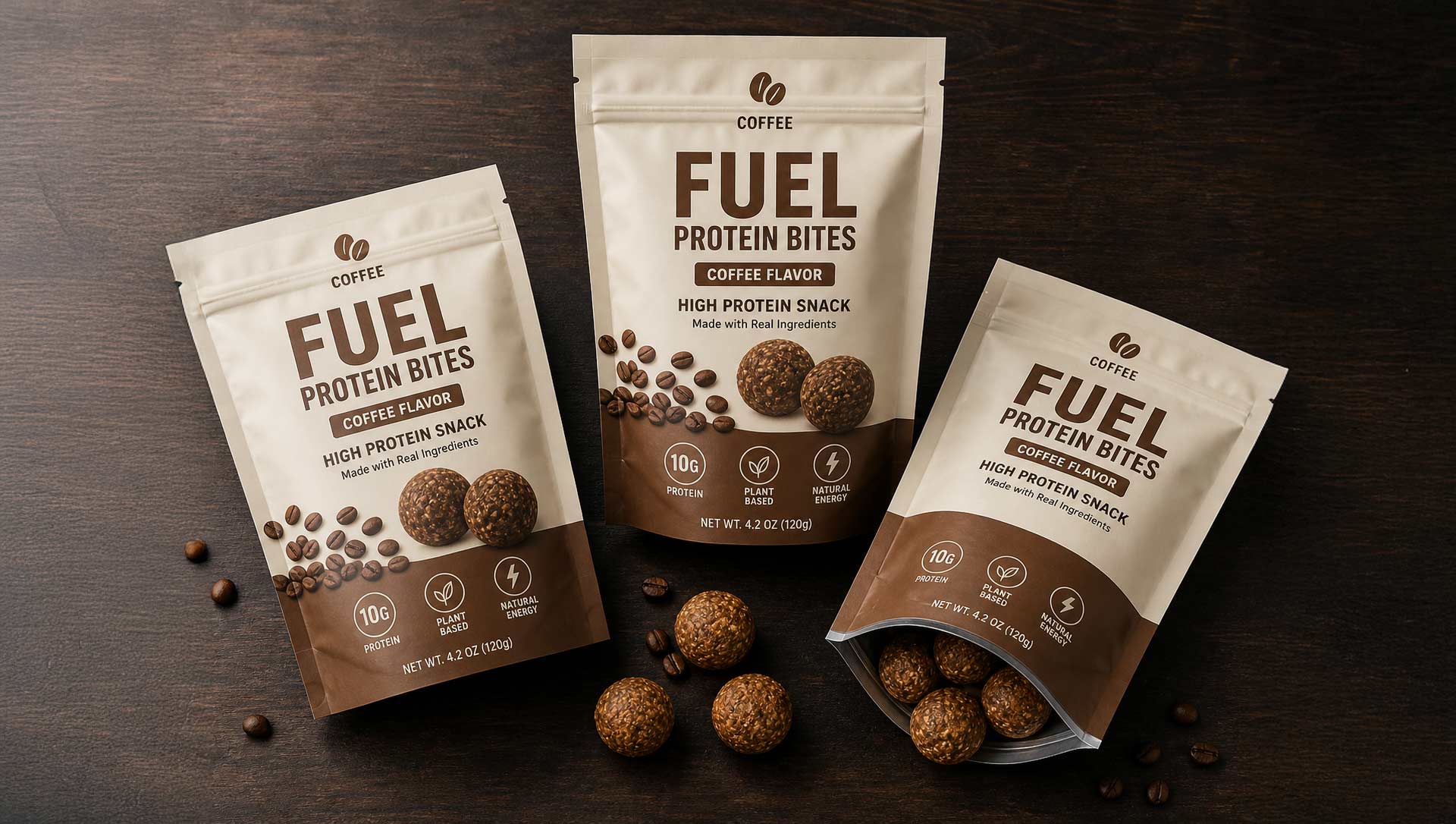
When the Packaging Gets It Right, the Bar Gets a Second Chance
A buyer scanning a snack shelf is making a decision in seconds. The protein bar packaging tells them whether the brand is worth picking up, whether the product justifies the price, and whether it is something they would come back for. Earning that second purchase means getting more than the front panel right. It means barrier film that protects flavor and texture over a full shelf life, formats that hold up in a gym bag or a shipping box, finishes that stand out in the actual retail environment the product is going into, and print quality that holds its own under close inspection. For coffee-flavored snack brands, working with a supplier that understands both coffee packaging performance and food packaging requirements is the fastest path to getting that combination right. Reach out to Savor Brands to request samples, talk through your barrier specifications, and find out which print tier makes sense for your current production volume.Why Us?
 3x SCA Best New Product Award Winner
Industrial Compostable Packaging
Your Very Own White Label Mobile App
Pono Collective: Providing Coffee Education
Lower MOQs With Our Digital Print Process
Setting Trends While Elevating Your Brand
Contact Our Team!
Other Blogs of Interest


Food Packaging for Protein Powders and Supplements: What Small Brands Need to Know
Why Supplement Brands Need Better Powder Packaging The supplement market has never been more competitive. Protein powders, pre-workout blends, collagen peptides, greens powders, and functional supplements are everywhere, and the brands that win are not always the ones with the best formula. They are...


How Growing Coffee Brands Are Handling Food Product Packaging
A Growing Product Line Needs a Smarter Packaging Strategy A lot of coffee roasters do not stay in just coffee for long. Granola, sauces, spice blends, chocolate bark, dog treats, and snack mixes have all shown up on the product lists of brands that started by selling a single bag of beans. That expa...


Custom Coffee Bags and Food Packaging: Grease, Oils, and Film Barriers Explained
Grease, Oils, and Freshness: Why Food Bags and Coffee Bags Are Not Built the Same At first glance, food packaging and coffee packaging can look similar. They might both be stand-up pouches. They might both be sealed, printed, and “barrier” films. But the problem they are solving can be very differe...


Seal Strength Made Simple for Coffee and Snack Packaging
Seal Strength 101: The Simple QC Fix That Stops Coffee Bag Leaks Leaky coffee bags and snack pouches are more than a small annoyance. They can ruin product freshness, waste inventory, and hurt customer trust. At Savor Brands, quality control often comes down to one detail many teams overlook: seal...