

Summer Is the Quiet Quarter Where Roasters Lose the Most Bags
Winter shipping gets all the worry. Cold weather slows trucks, snow shuts down hubs, and the holiday rush forces every operations team to scrutinize every package that goes out. Summer flies under the radar, and that is exactly when the most coffee gets quietly damaged in transit. A bag that sits in a delivery truck at 130 degrees for six hours, then bakes on a porch for another four, is a very different bag than the one that left your roastery. The film softens, the seal weakens, the valve behaves strangely, and the customer opens a box with a slightly off-smelling, slightly swollen, sometimes leaking bag and writes a polite review that costs you ten future customers. The frustrating part is that almost none of this shows up in your fulfillment data. Returns from heat damage are rare because most customers do not connect the bag's condition to the truck ride. They just decide the coffee tasted flat and quietly try a different roaster next month. Summer coffee shipping is a slow leak in your retention numbers that you will not see until fall, and by then the damage is done. Solving it is not expensive or complicated. It just has to happen before the next heat wave, not after the next complaint.What Heat Actually Does to a Coffee Bag in Transit
A coffee bag is a layered laminate film designed to hold up at room temperature and a reasonable amount of handling. Push that film into a hot delivery van and several things start happening at once. The polyethylene inner layer, which is the layer that gets heat-sealed to itself, starts to soften well before it visibly distorts. That softening is what weakens the seal. The outer print layer expands and contracts as temperatures swing during the day, which stresses the laminate bond. The aluminum or metallized barrier inside the film is largely fine at these temperatures, but the layers around it are doing real work just to hold their shape. Then there is the coffee itself. Freshly roasted beans continue to release carbon dioxide for weeks after roasting, and that off-gassing speeds up in heat. A bag that was barely puffed when it left your warehouse can look like a small pillow by the time it arrives. Add in residual coffee oils that turn waxy in heat and start migrating into the inner film, and you have a recipe for a bag that looks tired, smells slightly off, and tastes flat to the customer who opens it.- Heat softens the seal layer first, not the print layer you can see
- Off-gassing speeds up in warm conditions and over-pressurizes the bag
- Coffee oils migrate into the inner film and dull aromatics over time
- Repeated temperature swings during transit stress the laminate bond more than any single peak
The Seal Is the First Thing to Go
If a summer-shipped bag is going to fail somewhere, it almost always fails at the seal. The bottom gusset seal, the side seam, or the top heat seal after the bag is filled. None of those seals are made to flex repeatedly under heat, and a long delivery route with hot loading docks, hot trailers, and hot porches puts every single one of them through hundreds of small thermal cycles. The film does not have to melt for the seal to fail. It just has to soften enough at one weak point to let a slow stream of air pass through over the course of a few days. Stronger seals start at the film spec. A bag made from a thicker laminate with a higher-grade polyethylene sealant layer holds its seal at higher temperatures than a thinner, cheaper structure. That is one of the reasons roasters who ship year-round in hot climates tend to lean toward rotogravure coffee bags for their highest-volume SKUs. The print quality is the headline feature, but the substrate is doing the quiet structural work. Digital is still an excellent fit for small runs and short-window seasonal releases, and the gap between the two on summer durability is narrower than it used to be, but film thickness and sealant quality still matter and you should ask about both before ordering.Why Degassing Valves Get Weird in the Heat
The one-way degassing valve is one of the most important parts of a coffee bag, and it is also one of the parts most affected by summer shipping. A valve is a small mechanical assembly with a rubber membrane and a thin oil film that lets carbon dioxide escape without letting oxygen back in. In a hot truck, two things happen. The off-gassing pressure inside the bag climbs faster than the valve was designed to vent, and the oil film inside the valve can thin out and behave less predictably. You end up with valves that puff hard, valves that vent partially, and the occasional valve that gets stuck open and lets the bag breathe in both directions. A higher-quality valve with a tighter membrane and a heat-tolerant adhesive ring holds up far better in summer than a generic one. Position matters too. Valves placed too close to the top seal or at a fold in the film tend to stress under pressure changes. If you are spec'ing a new bag, ask your packaging partner what valve they use, where it is positioned on the face of the bag, and how it has performed in the warmest months of the year. The answer should be specific, not a shrug.
Choosing a Barrier Film That Survives a Hot Truck
The barrier film is the part of the bag that keeps oxygen and moisture out. Most quality coffee bags use a metallized PET layer or a true aluminum foil layer sandwiched between the print film and the inner sealant. Both work well at room temperature. In hot summer transit, aluminum foil structures tend to hold up better because the foil itself is a more stable barrier than vapor-deposited metallization. Foil bags also do a slightly better job of reflecting radiant heat, which matters more than people realize when a box is sitting in the sun. That said, metallized films are not a bad choice for summer if the rest of the spec is right. A thicker metallized structure with a high-quality sealant layer can match a thinner foil structure on durability. The mistake is assuming all barrier films are interchangeable. If you have been buying the same stock bag for two years and your supplier quietly switched the structure during a reformulation, you might be shipping a different bag than you think. Ask for a current spec sheet every spring before summer hits. That single conversation has saved more roasters from heat damage than any ice pack ever has.- Foil structures slightly outperform metallized films under heat and direct sun
- Sealant layer quality matters as much as the barrier itself
- Verify your current film spec at the start of every summer
- Consider running a tighter spec on your hot-route SKUs and a standard spec on local orders
Insulated Mailers and Ice Packs: When They Actually Earn Their Keep
Insulated liners and gel packs feel like the obvious summer answer, and they do work, but only in specific scenarios. For a one-pound bag of whole bean coffee going from a roaster in Oregon to a customer in Portland, an insulated liner is overkill. For a multi-bag subscription order going from Hawaii to Phoenix in July with a two or three day transit, an insulated mylar liner inside the mailer pays for itself in retention. The liner does not need to keep the coffee cold. It just needs to reduce the temperature swing the bag experiences during the worst hours of the trip. Ice packs are a different decision. For coffee, gel packs are almost never necessary and usually add more cost and weight than they are worth. The exceptions are products that actually need temperature control, like chocolate-coated espresso beans, freshly made cold brew concentrate, or any food packaging shipment containing dairy, fresh bakery items, or ready-to-drink coffee bottles. For those, a gel pack plus a proper insulated liner is the right answer, and the math actually works out because the alternative is a refund.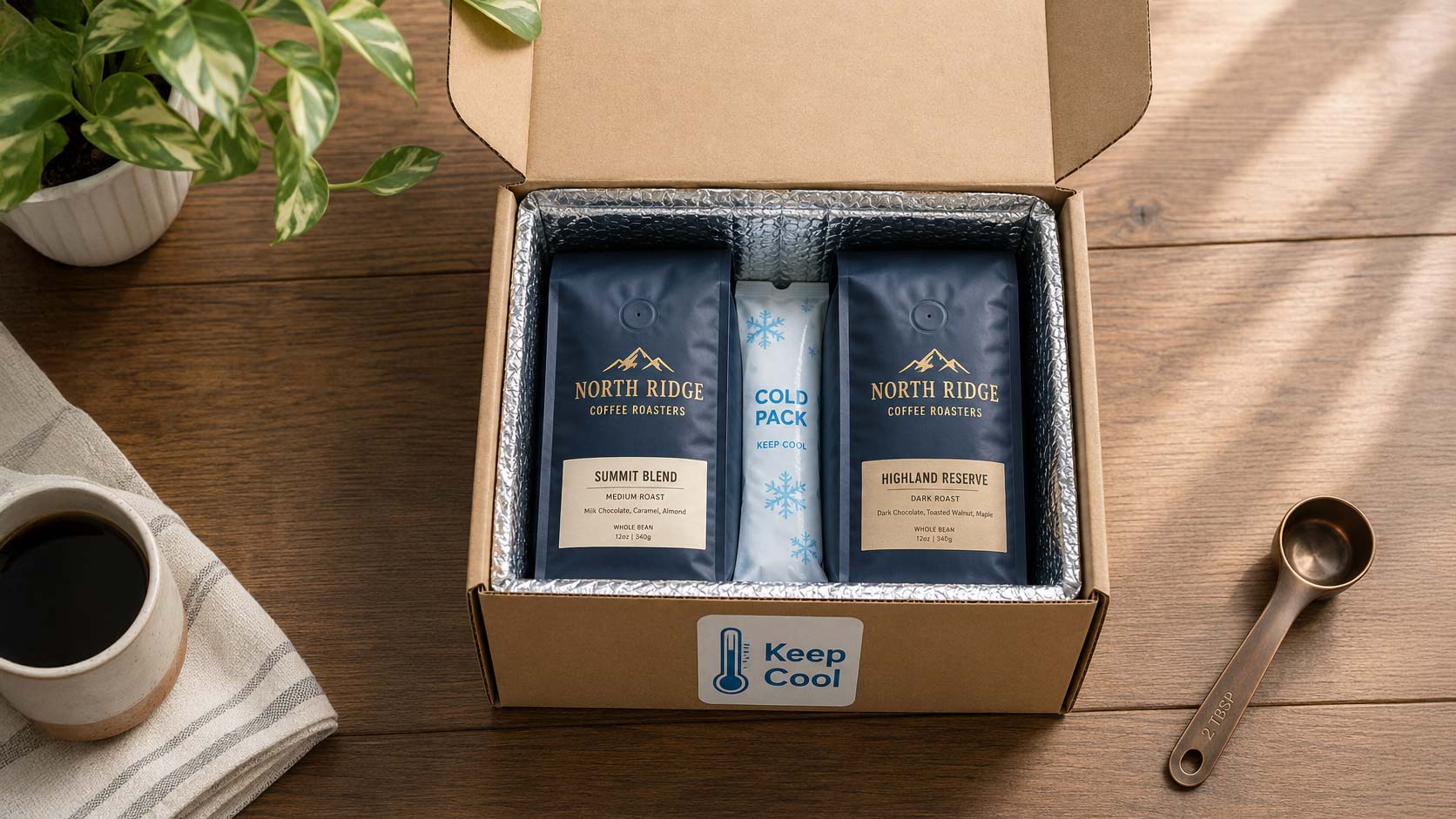
Carrier Choice and Transit Time Matter More Than You Think
The fastest fix for summer coffee shipping damage has nothing to do with the bag. It has to do with how long the bag spends in transit. A two-day shipment through a major carrier in summer sees dramatically less heat exposure than a five-day shipment through a lower-cost service. The price difference per order is often three or four dollars. The retention difference is much larger than that. Roasters who switch their summer orders to a faster service usually see fewer complaints, fewer one-time customers, and a measurable bump in subscription renewals heading into fall. Where you ship from also matters. A bag that leaves a coastal warehouse and stays in moderate temperatures for most of its trip arrives in much better shape than the same bag routed through a hot inland hub. Some roasters keep a small inventory stash with a fulfillment partner in a cooler region during the summer months and ship their hot-route orders from there. This is operationally heavier and only makes sense at certain volumes, but it is worth a serious look if heat damage has been an unspoken cost on your retention numbers.- Upgrade to a two-day or three-day service for summer subscription orders
- Avoid evening pickups that leave packages in hot trucks overnight
- Print "Heat Sensitive" or "Keep Cool" on the outside of high-risk shipments
- Send a delivery confirmation email reminding customers to bring the box inside quickly
Chocolate-Coated Beans, RTD Bottles, and the Other Heat Casualties
Plain whole bean coffee is the most forgiving product to ship in summer. Once you add any kind of coating, syrup, or liquid, the heat math gets harder fast. Chocolate-coated espresso beans turn into a single fused brick at 90 degrees. Caramel-coated coffee snacks soften and stick to the bag. Ready-to-drink coffee bottles, glass or plastic, can bloat or vent caps. Cold brew concentrate in a flat pouch can swell hard enough to compromise the seal. Each of these products needs its own packaging approach, often with a thicker barrier, a different bag style, and almost always an insulated mailer for any route over two days. If your roastery is moving into ready-to-drink or coffee-adjacent food products, summer is when those product lines stress-test your packaging spec. A short run on digital packaging for a summer-only product line lets you test heat performance and design before committing to a long rotogravure run for next year. Treat the summer release as a controlled experiment, document what worked, and use the lessons to spec your year-round product line correctly.Practical Fixes You Can Roll Out This Week
You do not need to redesign your packaging program to survive this summer. The biggest improvements come from a small set of operational moves that any roaster can make in the next seven to ten days. None of them require a new bag order. Most of them cost very little. All of them compound. Make the list, work through it once, and your summer shipping baseline improves before the next heat wave hits.- Pull a current film spec sheet from your packaging partner and verify the structure
- Switch summer subscription orders to a two or three day service
- Add a "Keep Cool" or "Heat Sensitive" label to outside of high-risk packages
- Stock a few insulated mylar liners for orders going to hot inland zip codes
- Send a delivery alert email and a short note about bringing the box inside
- Pad bag fill weights slightly to reduce headspace and slow over-pressurization
- Review your degassing valve placement and ask about a heat-tolerant option
Closing: A Quiet Quarter Worth Treating Like the Holiday Rush
Summer Coffee Shipping Is the Hidden Test Every Roaster Passes Without Knowing It The holiday quarter forces every roaster to look at packaging, fulfillment, and shipping carefully because the cost of failure is loud and immediate. Summer is the opposite. The failures are quiet, the customer rarely complains, and the damage shows up months later in subscription churn and review-site averages. A roaster who treats summer coffee shipping with the same care they give December has a structural advantage in retention that compounds every year. The bag is the same. The truck ride is harder. The fix is mostly operational and very affordable. Lock in your summer packaging plan this week and the rest of the warm season takes care of itself.Why Us?
 3x SCA Best New Product Award Winner
Industrial Compostable Packaging
Your Very Own White Label Mobile App
Pono Collective: Providing Coffee Education
Lower MOQs With Our Digital Print Process
Setting Trends While Elevating Your Brand
Contact Our Team!
Other Blogs of Interest


Best Coffee Packaging Shipping Methods for Online Retail Orders
Best Methods for Shipping Coffee Online coffee retailing is only successful when shipping is protected. Choosing the right box and product placement, makes all the difference to ensure your coffee arrives safely. Shipping Consistency To ensure that your coffee arrives to the customer intact -...


Does Your Coffee Packaging Actually Work? Shelf Life Explained
How Packaging Impacts Coffee Shelf Life Not all packaging keeps coffee fresh the same way. Let’s break down how material type, resealability, and valve options impact how long coffee can stay at its best. Shelf Life with Non-Aluminum Barriers Packaging without aluminum doesn't seal in fre...


The Science of Headspace in Coffee Bags: Why That Air Gap Is Everything
That Empty Space in Your Coffee Bag Is Working Harder Than You Think Walk into any specialty coffee shop and grab a bag off the shelf. Notice how the top of the bag is not packed to the brim? There is a gap between the coffee and the seal. That gap has a name: headspace. And it is one of the most mi...


METPET vs PET Coffee Bags: What’s the Real Difference?
Freshness Wins with the Right Coffee Barrier People often mix up METPET and PET in coffee packaging. They are related but not the same. PET is a clear, tough plastic. METPET is PET that has a very thin metal layer, usually aluminum. That thin layer changes how well the package blocks oxygen, moistu...