

Your Coffee Bag Can Do More Than Look Good. It Can Actually Help the Planet
Digital printing is one of those choices. And not in a vague, feel-good way. There are specific, measurable reasons why switching to digital packaging production reduces your coffee brand's carbon footprint. This post lays those reasons out clearly so you can make an informed decision and, if it fits your brand, confidently explain it to your customers and wholesale buyers.No Printing Plates, No Plate Waste
Traditional rotogravure printing requires a set of engraved metal cylinders, one for each color in your design. These plates are manufactured before a single bag rolls off the press. They take energy to produce, they require chemicals during the engraving process, and once your run is done or your design changes, they are essentially scrap. For a coffee roaster printing a seasonal label or a limited release, that plate cost and waste happens every single time you make a change. Over the course of a year, the cumulative environmental cost of repeated plate production adds up quickly, and that burden falls entirely on shorter or more frequent print runs. Digital printing requires no plates at all. Your design goes from a file directly to the print head. No cylinders, no engraving chemicals, no metal waste sitting in a landfill after a run. That one difference alone removes an entire step from the production chain, along with the energy and material inputs that step demands.No Solvent-Based Inks in the Process
Rotogravure and some flexographic printing processes use solvent-based inks. These inks help color adhere to flexible packaging films at high speeds, but they come with a cost. Volatile organic compounds, or VOCs, are released during printing and drying. VOC emissions contribute to air quality problems and are tightly regulated in many manufacturing environments because of their environmental and health effects. Solvent recovery systems are used to capture some of those emissions, but they add complexity, energy use, and cost to the operation. And even with recovery systems in place, some emissions still escape into the atmosphere. Digital printing uses UV-curable or water-based ink systems that do not release VOCs during the printing process. There is no solvent drying phase, no exhaust ventilation system trying to capture chemical vapors, and no hazardous ink waste to dispose of at the end of a run. The process is cleaner at the source, which is the most straightforward way to reduce a process's environmental impact. For coffee brands that want to print packaging domestically or with a partner whose manufacturing practices they can actually verify, the ink difference is a meaningful one.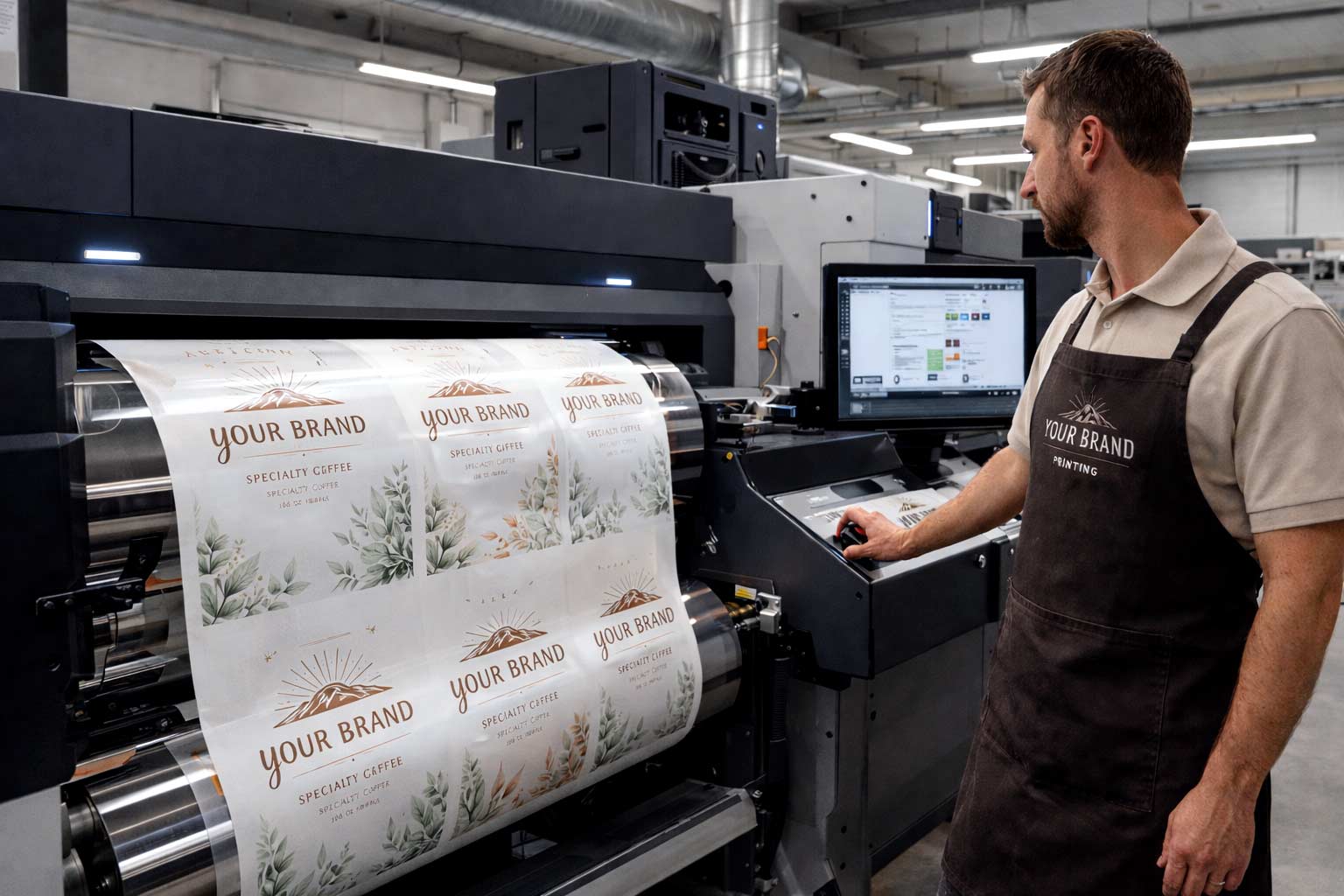
Lower MOQ Means Less Overstock and Less Landfill Waste
One of the most underappreciated carbon costs in packaging is overproduction. When a printing process requires a minimum order of 10,000 or 20,000 units to justify the plate and setup cost, brands are forced to order far more than they can move in a reasonable timeframe. That excess inventory sits in warehouses. It ties up cash. And when a design changes, a seasonal window closes, or a product gets discontinued, those bags often go straight to the trash. Landfill waste from unused packaging is a real and largely invisible part of the carbon footprint conversation. Every bag that gets thrown away without ever holding a product represents wasted materials, wasted production energy, and a wasted opportunity to do it right. Digital printing works well at low minimum order quantities. Roasters can order what they actually need for a season, a campaign, or a product launch, and reorder only when inventory runs low. That flexibility means far less overproduction, far less waste, and a packaging operation that is genuinely sized to match your actual sales volume.- Minimum order quantities as low as a few hundred units are possible with digital printing
- Seasonal and limited-release labels can be ordered in small batches without absorbing a large setup cost
- Design changes can happen quickly without scrapping thousands of already-printed bags
A Shorter, Simpler Supply Chain
Rotogravure printing for coffee packaging is often done overseas, where high-volume plate printing is more cost-effective. That means your bags are printed in one country, shipped to a distribution point, and then shipped again to your roastery. Each leg of that journey burns fuel and adds carbon to your brand's operational footprint. Digital printing changes that equation. Because setup costs are low and minimum orders are small, it becomes practical to print packaging domestically or regionally. Savor Brands offers digital printing with production and distribution centered in the United States, which shortens the distance your packaging travels before it ever reaches your facility. A shorter supply chain is also a more resilient one. Brands that learned hard lessons from global shipping disruptions in recent years know that depending on overseas production for packaging creates real risk. Digital printing lets you stay closer to home, and that proximity benefits both your carbon output and your peace of mind.What This Means for Your Brand in 2026
Sustainability is becoming a procurement criterion, not just a brand value. Retailers, distributors, and wholesale buyers are starting to ask specific questions about how products are made and packaged. Coffee brands that can point to specific practices, not just general commitments, are in a much stronger position when those conversations happen. Digital printing gives you concrete answers. No plates. No solvent inks. Low MOQ to prevent overstock. Domestic production with a shorter supply chain. These are not vague gestures toward sustainability. They are documented, verifiable decisions that show up in how your packaging is made. And because Savor Brands' eco-friendly digital printing service ties directly into a broader approach to sustainable coffee packaging, including compostable and recyclable material options, roasters can stack multiple sustainability choices together and tell a packaging story that actually holds up to scrutiny.A Smart Investment That Pays Back More Than Once
There is a financial case for digital printing, and there is an environmental case. The good news for coffee brands in 2026 is that both cases point in the same direction. Lower minimums reduce the capital you tie up in packaging inventory. Less waste means fewer bags going to landfill. Shorter supply chains reduce freight cost and shipping emissions. And no plate fees mean you can iterate on your design without a large upfront investment every time. When sustainability and business efficiency align, the decision becomes much easier to make. Digital printing for coffee packaging is one of the clearest examples of that alignment in the packaging industry right now. If your brand is actively working to lower its carbon footprint, or simply trying to stop making choices that add to it unnecessarily, eco-friendly digital printing is worth a serious look.Print Smarter, Brand Greener
Your coffee packaging is one of the most visible choices your brand makes. It is what customers hold in their hands, what sits on retail shelves, and what tells the story of your values before a single word is read. Choosing digital printing over traditional plate-based methods is a decision that cuts waste at the source, from the production floor all the way to your customer's hands. Fewer plates, cleaner inks, smaller runs, shorter supply chains: each of those choices adds up. And in 2026, those choices are starting to matter more than ever.Why Us?
 3x SCA Best New Product Award Winner
Industrial Compostable Packaging
Your Very Own White Label Mobile App
Pono Collective: Providing Coffee Education
Lower MOQs With Our Digital Print Process
Setting Trends While Elevating Your Brand
Contact Our Team!
Other Blogs of Interest


Brewing Change: What is the environmental impact of coffee processing?
The Environmental Footprint of Coffee Processing Coffee production requires vast amounts of water, energy, and land, making it resource-intensive. Additionally, traditional farming methods often involve clearing forests, contributing to 6+. Here are some of the most pressing environmental issues ass...


Heart Roasters is Brewing Bold Moves for the Planet
Brewing Change: How Heart Roasters Turns Coffee Bags into Building Blocks Heart Roasters isn't just known for great coffee — they're leading a bold charge in sustainability with real-world impact. From transparent trade practices to repurposing their packaging into construction materials, they're sh...

Why Coffee Packaging’s 3% Carbon Footprint Still Matters
Coffee is one of the world’s favorite beverages, enjoyed by millions daily. However, it often comes with a side of guilt due to its environmental implications. From cultivation to delivery, coffee's supply chain significantly contributes to global emissions. Surprisingly, coffee packaging accounts for ...